
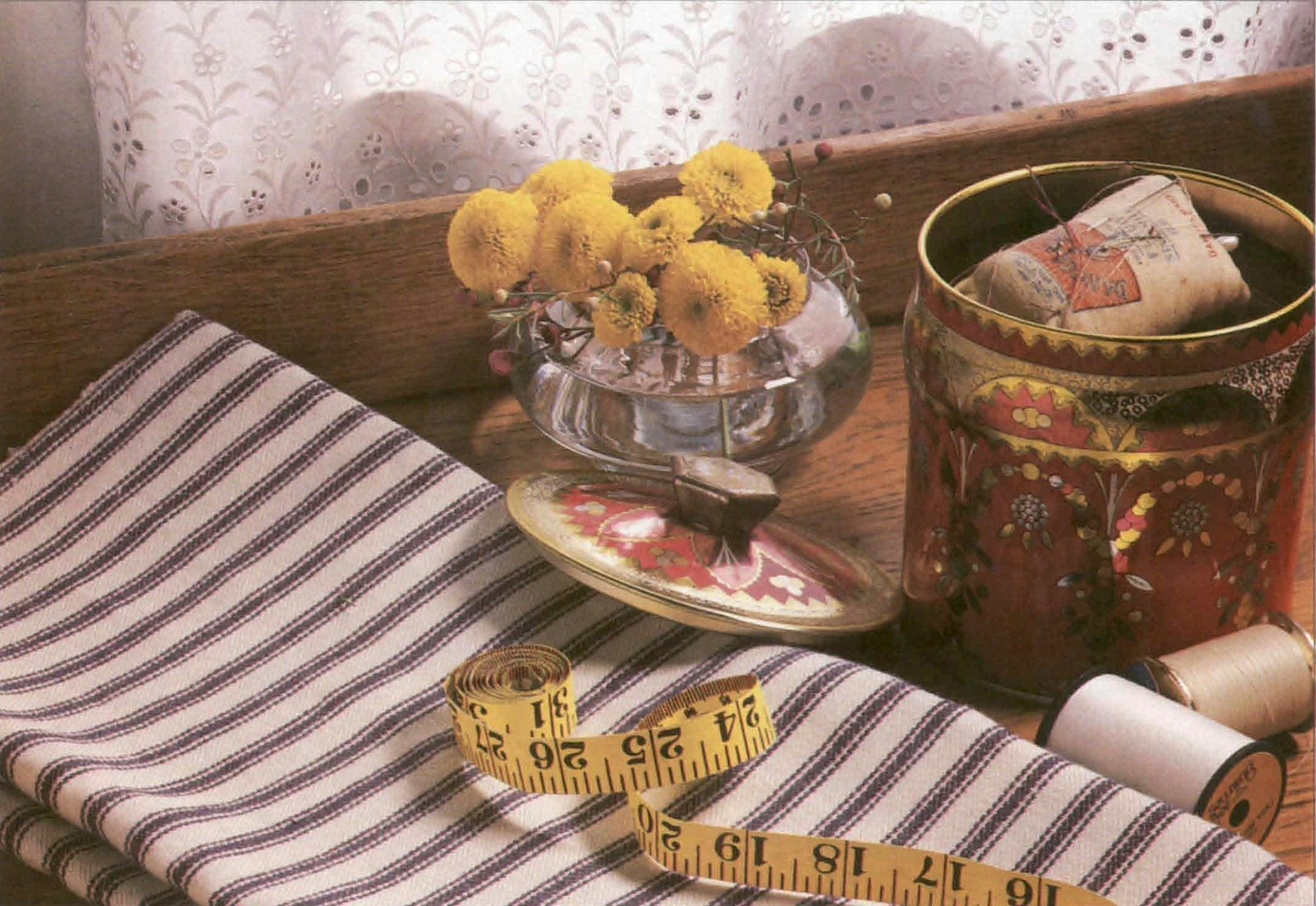
Years ago, while working on the March/April 2022 issue of Handwoven, I became curious about the history of ticking. Even if you’re not familiar with the name, chances are you’ve seen this iconic striped fabric. It’s not uncommon to see ticking used as curtains, upholstery fabric, pillows, and other home décor items. While today ticking is seen as sophisticated and classic, it wasn’t always that way. The story of ticking is similar to the tale of Cinderella, a hidden beauty brought out into the spotlight with the help of a fairy godmother.
Once Upon a Mattress
The name ticking comes not from clocks, but from mattresses. For centuries, mattresses were made by making giant fabric bags and stuffing them with something soft—including straw, feathers, rags, wool, etc. These were known as tick mattresses and the fabric used to cover them was similarly known as ticking.
Mattress ticking was a thick, densely woven twill fabric. It needed to be sturdy, not just to hold up to daily use, but also to keep any particularly pokey bits of stuffing from jabbing unsuspecting sleepers. The stripes were a French innovation, introduced at some point during the early Renaissance before spreading throughout Europe and, eventually, to the United States.
 Even after tick mattresses were mostly replaced by modern manufactured mattresses, they were still made using striped ticking fabric. Photo by Russell Lee. Library of Congress, Prints & Photographs Division, Farm Security Administration/Office of War Information Black-and-White Negatives.
By the 20th century, ticking was available in a variety of colors and styles ranging from simple black and white stripes to more decorative, multicolored patterns. Even with this glow up, ticking was still seen as cheap fabric suitable for mattresses, army tents, or aprons—beautiful but still relegated to toiling in the metaphorical cinders.
Sister Parish: Fairy Godmother and Interior Designer
Then came Dorothy “Sister” Parish, and everything changed. As a new bride in 1933, Sister made it her mission to decorate her new home while sticking to a strict budget. One of the ways she saved money was by sewing drapes out of ticking fabric. While this was an outlandish choice at the time, it does make sense—ticking was inexpensive, durable, and aesthetically pleasing. Sister saw the potential in the fabric and proudly hung it from her windows.
Sister ended up enjoying decorating her home so much she started an interior-design business. Her philosophy was simple: Homes should be comfortable and colorful, and instead of seeking out the next new thing, she preferred to look to the past for inspiration. As she put it, “Innovation is often the ability to reach into the past and bring back what is good, what is beautiful, what is useful, what is lasting.”
Over the years, Sister helped develop what we now know as the American Country aesthetic, a style with a focus on rustic elegance—think handwoven rag rugs, patchwork quilts, white wicker furniture, and, of course, ticking fabric drapes and upholstery. She went from decorating the homes of friends to working with the upper crust of society, including none other than Jacqueline Kennedy.
A Happy Ending
 Home décor items made from ticking fabric, including the throw pillows shown here, are a favorite of many modern interior designers. Photo by Tomi Saputra on Unsplash
Today, ticking fabric is a symbol of quiet elegance. It’s sophisticated without being ostentatious. It’s also no longer exclusively a stiff, densely woven fabric—ticking is woven in a wide variety of thicknesses suitable for myriad uses. You can find a wide range of items made from ticking fabric including towels, napkins, and even clothing. Ironically, the one place you probably won’t see ticking is at the mattress store—today, most mattress coverings are woven in damask. A very happy ending for this true rags-to-riches story.
Happy Weaving!
Christina