Contents
We’re asking you to read it and weave for our Summer 2027 issue of Easy Weaving with Little Looms as we celebrate everything we love about summer reading.
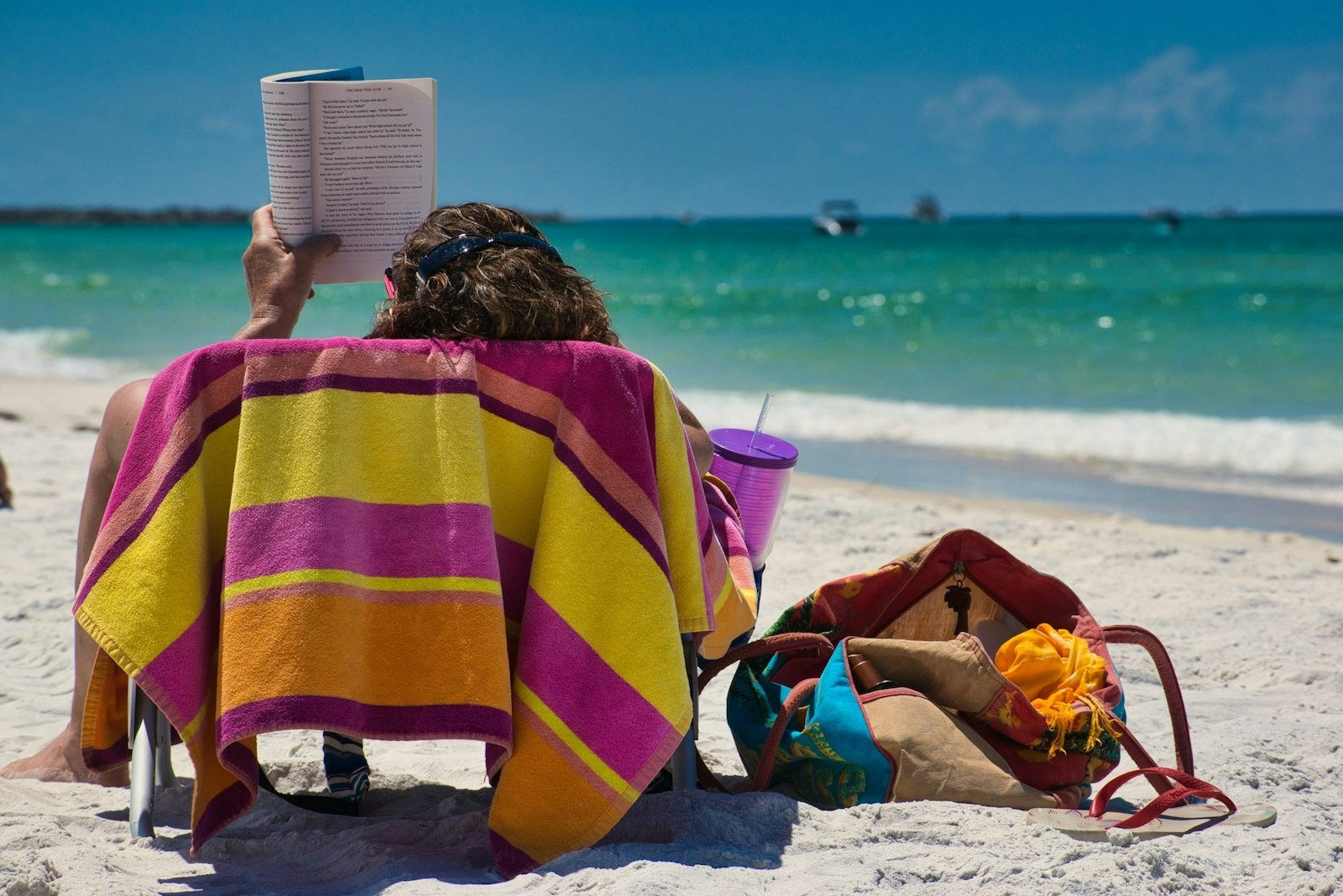
When I think about summertime reading, I think about enjoying books on the beach, by the pool, or lounging on my favorite porch swing—preferably with a cold drink close by. I also think about trips to the library to load up on books and take advantage of the summer-reading program. So for this issue, we want projects inspired by books, libraries, favorite bookstores, and the act of reading itself.
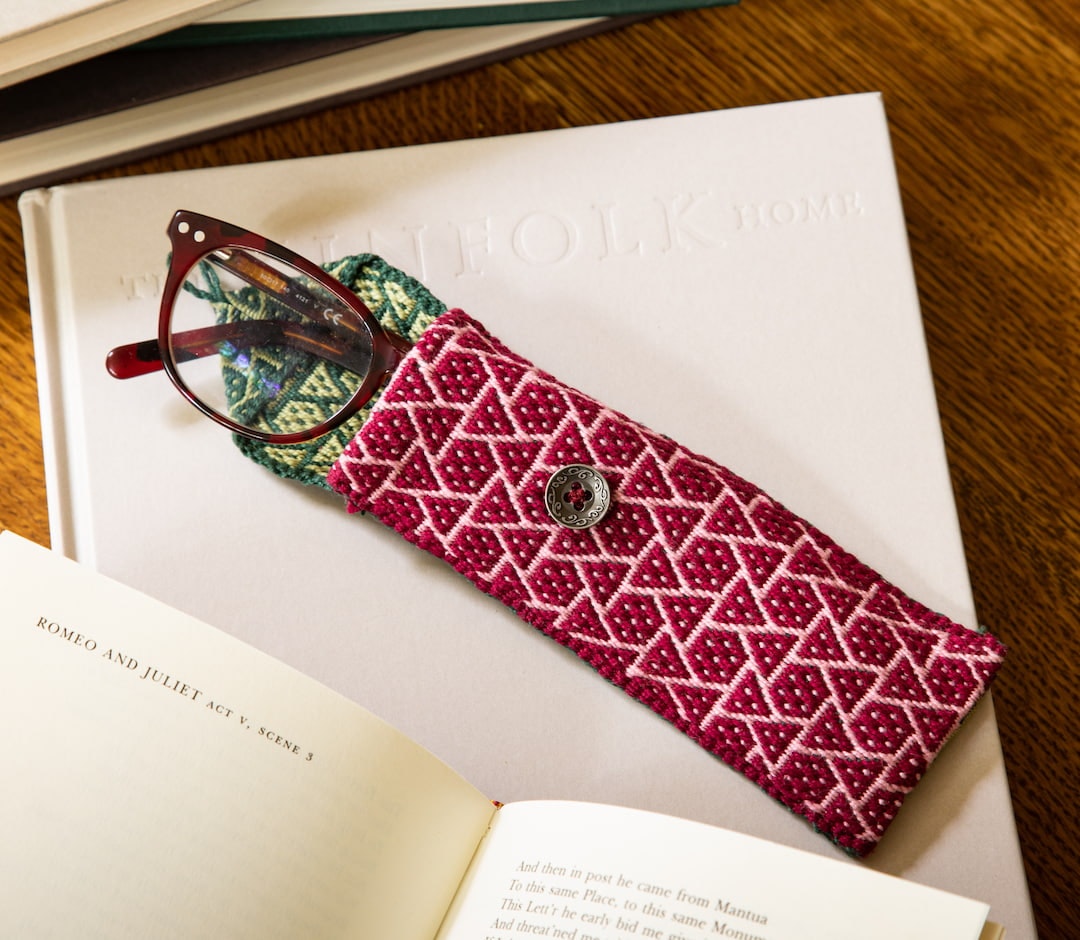 Projects designed for readers, such as the Spectacular Spectacle Pouch by Marieke Kranenburg, would fit perfectly in the Summer 2027 reading issue. Photo by Matt Graves
What We’re Looking For
Project Specifications
For this issue, we’re looking for a variety projects related to books and reading. We’d like items inspired by specific books, series, characters, and/or authors; projects designed to use while reading; pieces inspired by libraries or favorite bookstores; and other book-related items.
We value beginner-friendly projects just as much as those with more advanced techniques and try to have projects for all levels of weavers in each issue. If you have an idea for a plain-weave design, we’d love to see it! You also don’t need to be an advanced or previously published weaver to submit a proposal—all you need is a good idea.
All yarns need to be commercially available—projects made from handspun or discontinued yarns will not be accepted, with the exception of wefts made from garden materials. Hand-dyed yarns will be allowed as long as either the yarn is available for sale or instructions are given in the project for dyeing the yarn.
As usual, all projects need to be woven on a rigid-heddle, tapestry, pin, inkle, or band loom—tablet and backstrap weaving count as projects woven on band looms.
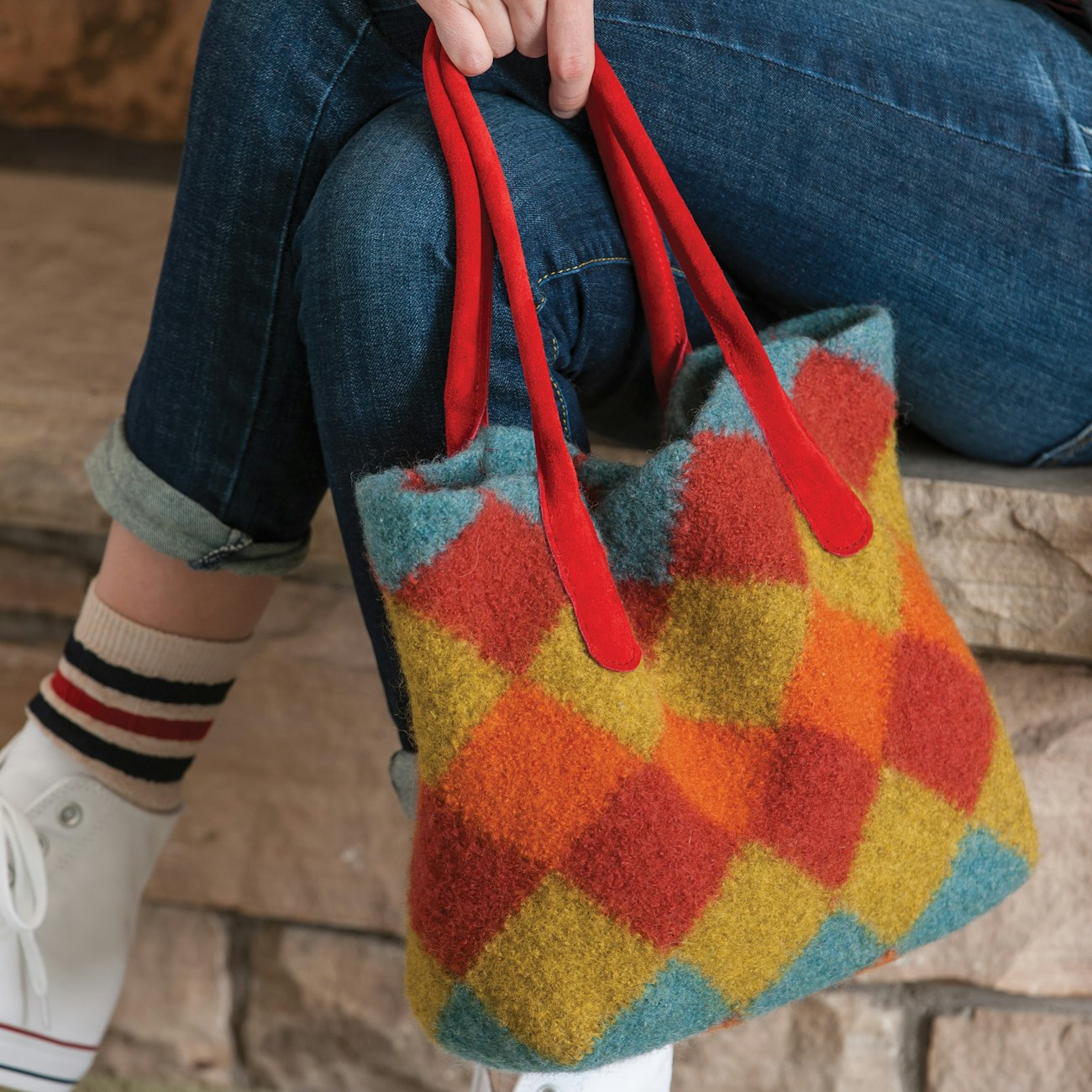 Extra sturdy tote bags, such as this Diamond Tote by Deborah Shelmidine, are a must for book lovers. Photo by Joe Coca
Types of Projects
For this issue, we’d like to showcase a variety of project types as well as ways in which the theme is interpreted. We want a balance of item types including wearables, home decor, kitchen linens, and bags. Please note: We will not be accepting any bookmark projects this issue. Also, while we encourage projects inspired by book characters, we do not want any literal interpretations. For example, while we would consider a scarf design for Peter Rabbit, we would not accept a Peter Rabbit stuffed animal.
Examples of projects include:
- Accessories and other items designed for a specific book character such as a shawl for Elizabeth Bennet or satchel for Sherlock Holmes
- A tote bag for hauling books to the lirbary, bookstore, pool, or beach
- Kitchen items and table linens inspired by books where cooking and food are part of the plot or an important part of the story—think Martin Walker’s Bruno, Chief of Police series
- Pillows for more comforatble reading
- Mug rugs and coasters, especially those that can stand up to being used outdoors
- Items to use when reading outside including picnic blankets and beach towels
- Cloth covers for favorite books
- Touch books for babies and toddlers
- Projects with words woven into the fabric
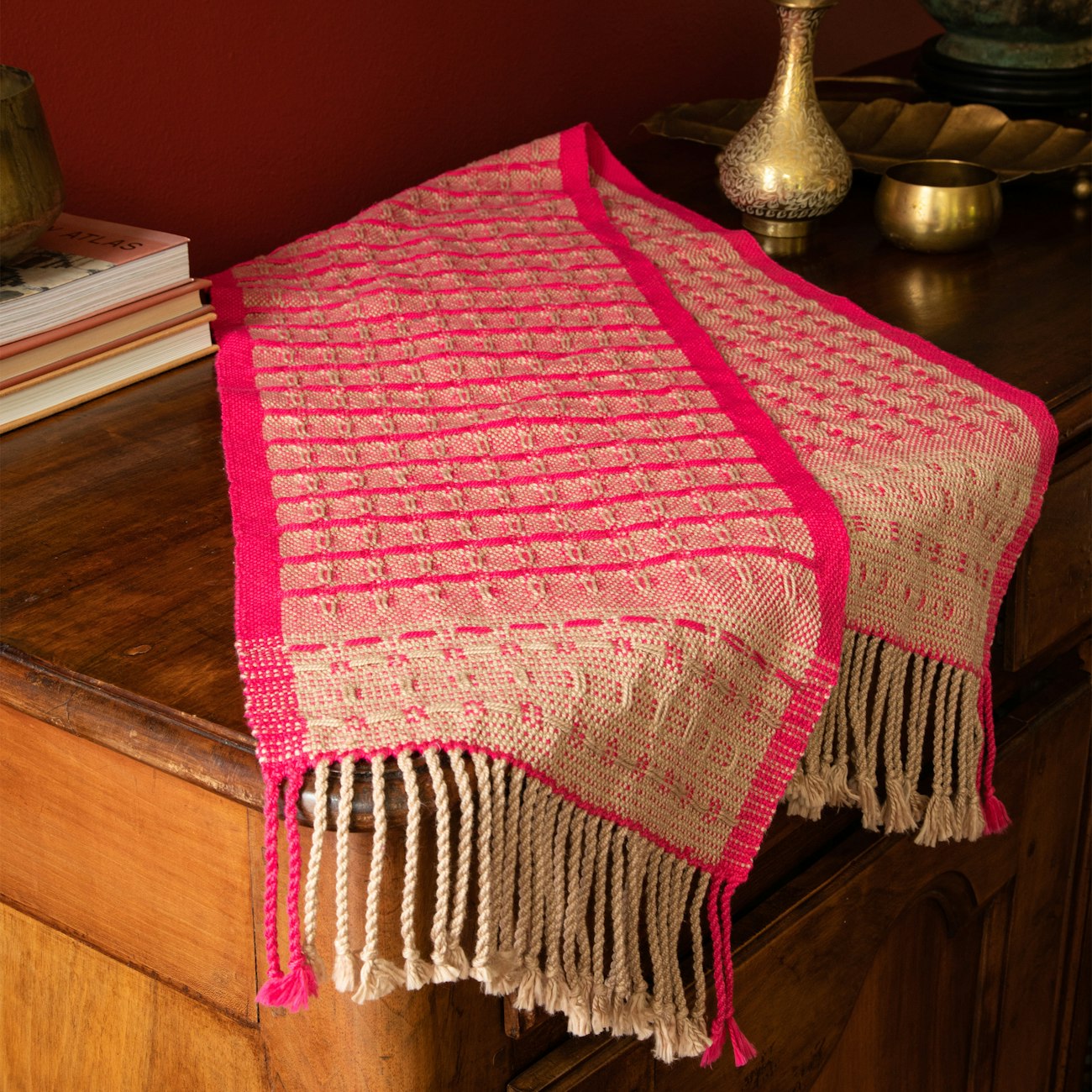 Christine Jablonski based this beautiful runner off of a description of a vibrant pink sari in one of her favorite books. Photo by Matt Graves
Using the Palette
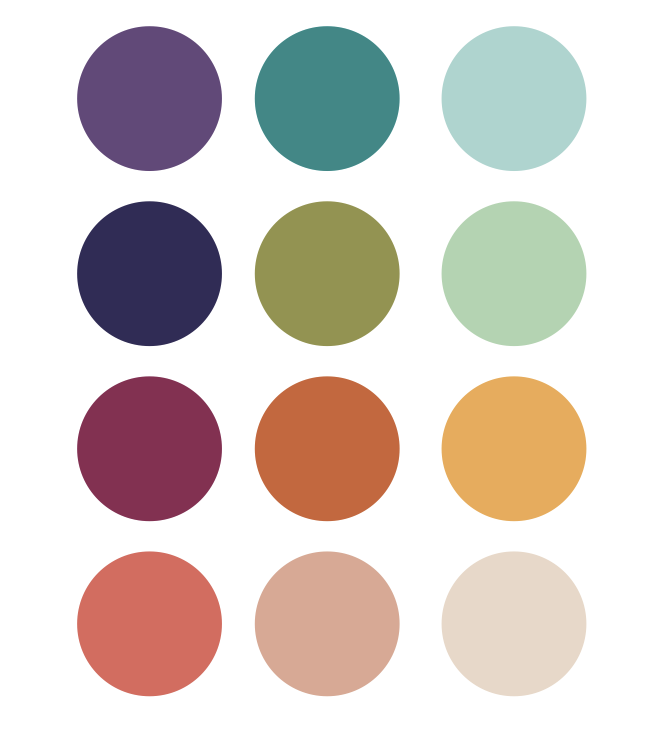
You can find the palette for the issue below or download it here. Please note that black, white, and all natural shades of wool are considered part of the palette, and you are welcome to use yarns that are darker or lighter versions of the colors in the palette as well as heathered yarns.
Articles and Tutorials
For articles and tutorials, only an outline is required for the initial proposal; however, we do encourage you to send any images you might have to better support your proposal. If you would like to both weave a project and write a tutorial for a specific technique used in the project, please submit the proposal for the tutorial and project seperately.
Submitting Proposals
We base our project selections for each issue on contributor photographs. With each project proposal, please include a photo or photos of the finished item or of items you’ve woven that are most similar to the item you propose to weave for the issue. We will review the proposals and ask for additional photographs if needed. After the project-selection meeting, we will contact everyone whose project is accepted and ask that it be submitted along with the project paperwork.
Articles do not need to be written before proposing. Instead, please include the article’s outline as part of your proposal. Outlines should be submitted as attachments in Word documents, Pages documents, or as PDFs.
Key Dates
• Proposals for projects (including preliminary photos) and articles due: 5/18/2026
• Additional photographs of projects due: 7/13/2026
• Non-project article text and photographs due: 8/24/2026
• Physical projects with paperwork due: 8/24/2026
Submission Forms and Other Resources
Please use our Little Looms submission form for proposals. Note that we’ve recently updated our submission guidelines, and they can now be found here.
Use the email address below for any questions or inquiries that won’t fit into our submission form. Please contact us and ask for a physical address to send any pieces of your proposal that cannot be emailed.
Editorial email: [email protected]
We are looking forward to seeing your proposals for projects and articles!
Happy weaving!
Christina