Contents
As soon as the weather even hints at the warmth of spring, I feel the irresistible urge to start planning, and in some cases planting, my gardens. Not only are my gardens a source of cut flowers and food, they’re also a source of inspiration for possible weaving projects. Through gardening I fell in love with poppies and designed a scarf around them, which ended up in an issue of Handwoven. More recently, I harvested a few precious ears of Glass Gem Corn—all different—and immediately started wondering how those colors would look in silk or Tencel. As I pondered just such a project, I realized that I had also found the inspiration for the theme of the Spring 2027 issue: In the Garden.
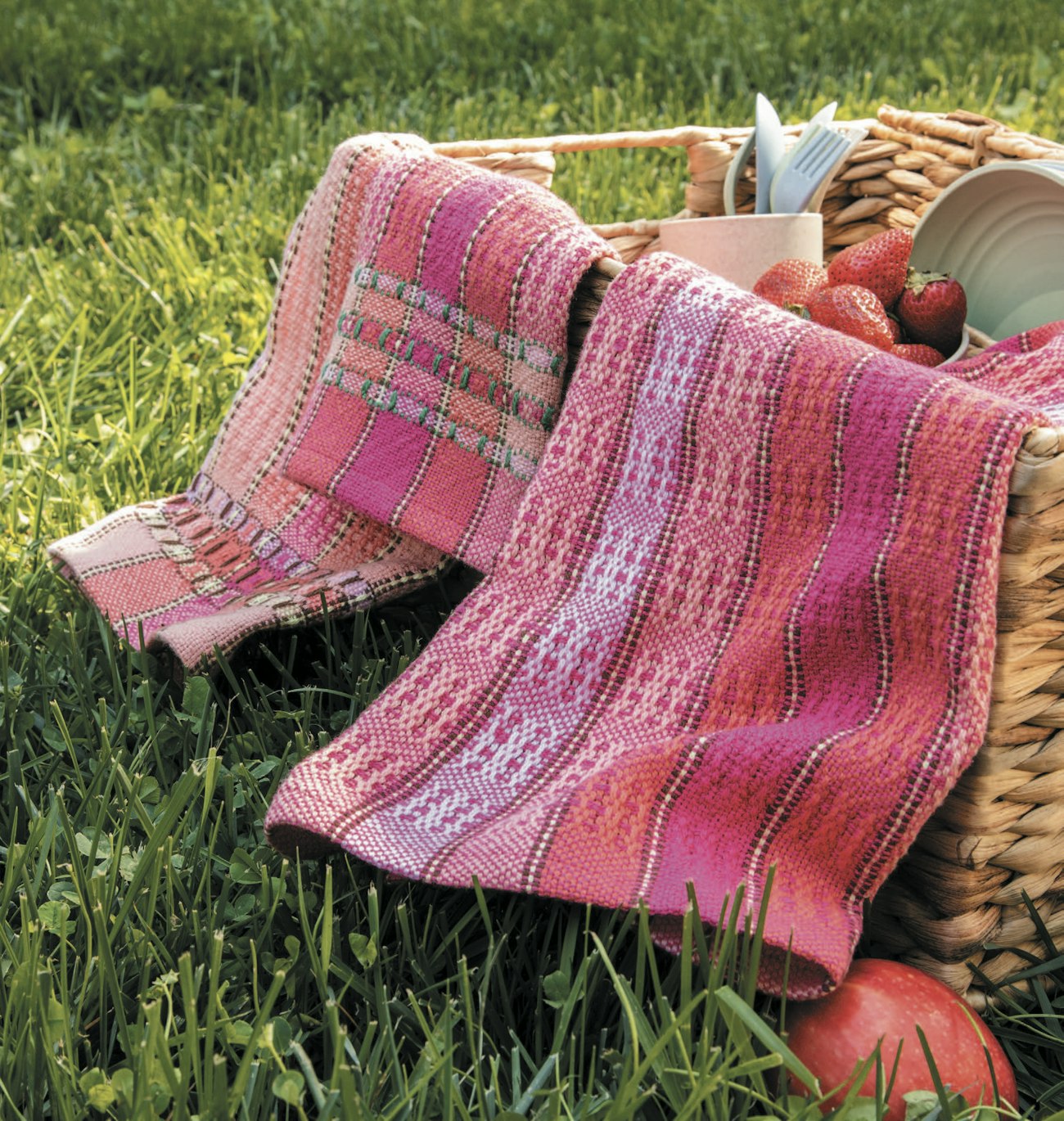
Malynda Allen’s Rose Garden Towels would fit the In the Garden theme perfectly. Photo by Matt Graves
What We’re Looking For
Project Specifications
For this issue, we’re looking for projects that are inspired not just by plants, but by just about anything commonly found in gardens including insects, small animals, soil, and mulch. We also want to see projects made for gardening and gardeners, handwoven items to use and wear.
Projects can also be made using plant materials found in gardens—think botanical dyes made from common garden flowers or wefts using leaves or stems. In these cases, the projects should have clear instructions for any dyeing, weft preparation, etc., along with instructions for weaving.
All yarns need to be commercially available—projects made from handspun or discontinued yarns will not be accepted, with the exception of wefts made from garden materials. Hand-dyed yarns will be allowed as long as either the yarn is available for sale or instructions are given in the project for dyeing the yarn. As usual, all projects need to be woven on a rigid-heddle, tapestry, pin, inkle, or band loom—tablet and backstrap weaving count as projects woven on band looms.
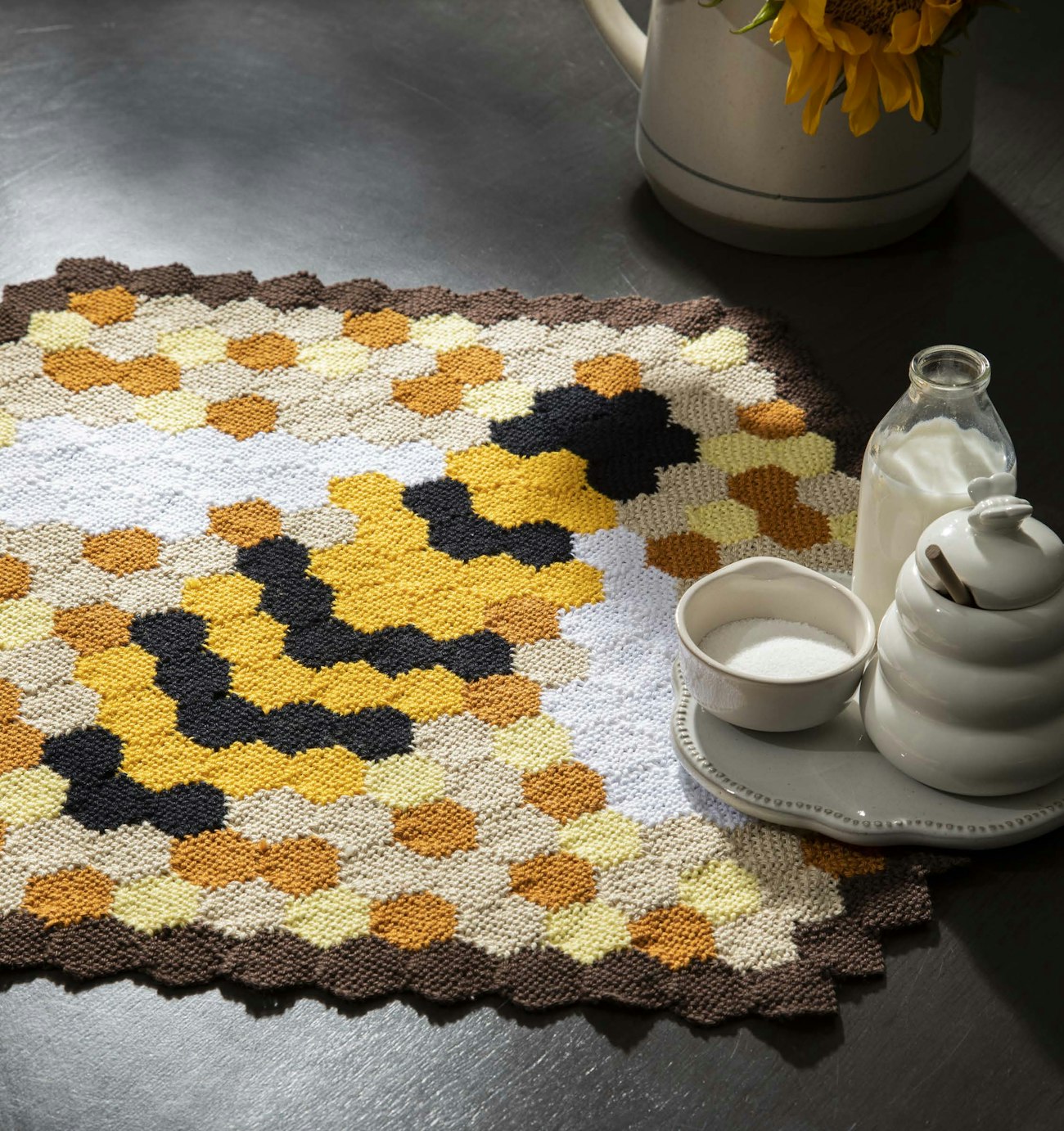 Weaving inspired by common garden insects, such as the Queen Bee Table Topper by Gabi van Tassell shown here, will also be accepted. Photo by Matt Graves
Types of Projects
For this issue, we’d like to showcase a variety of project types as well as ways in which the theme is interpreted. We want a balance of projects featuring plant motifs, palettes inspired by plants, and items designed for gardening. Here are some examples of projects:
- Basket for harvesting—baskets do not need to be loom woven
- Hat and/or hatband to wear while gardening
- Pile projects inspired by grasses
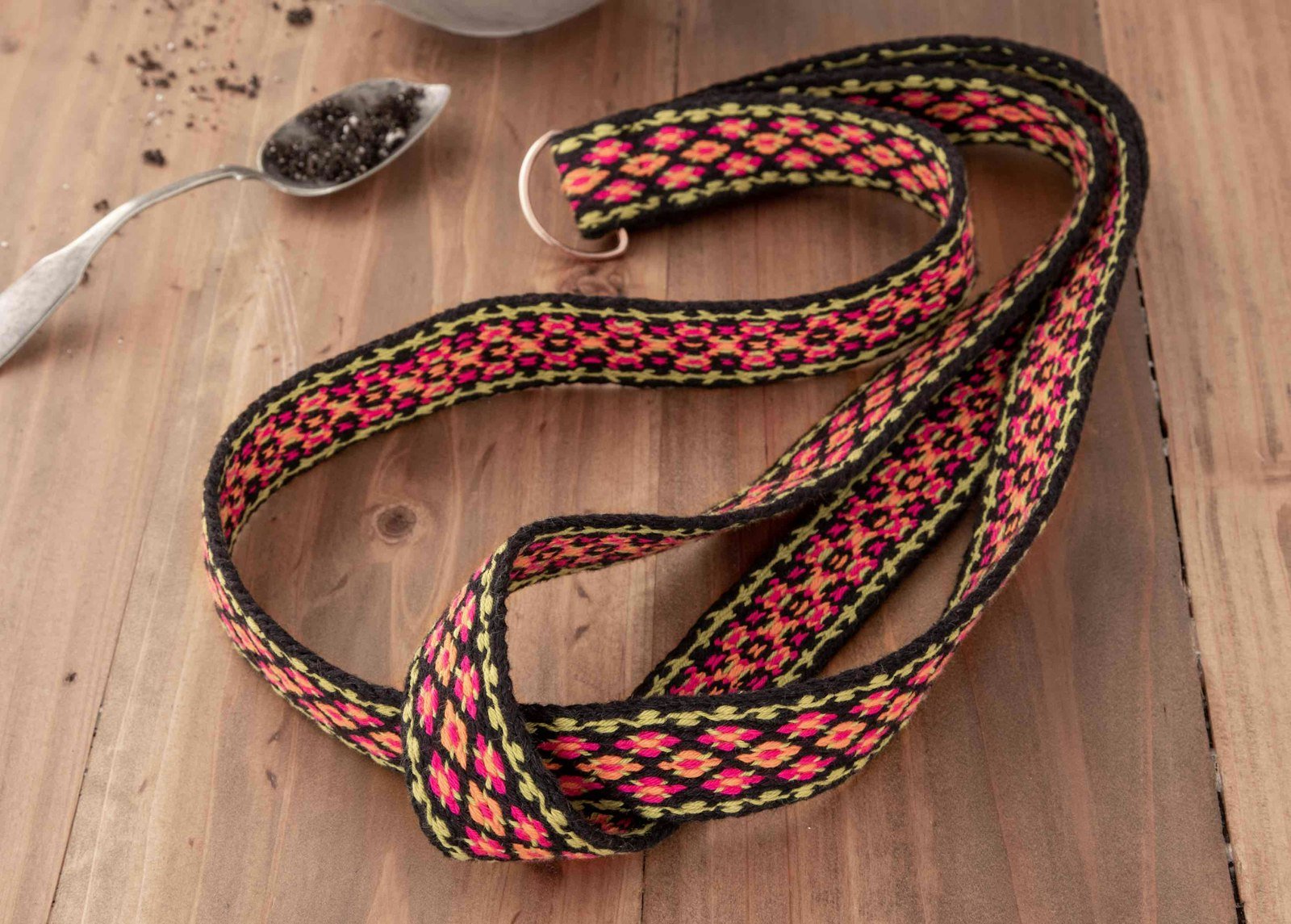
- Bands of all kinds featuring floral and/or leaf motifs
- Shawls featuring the colors or patterning of butterflies, beetles, and other insects
- Household items featuring simple plant-inspired motifs
- Vegetables or insects woven in pick-up as the border
- Projects woven in patterns or structures related to gardens such as rosepath or Brooks bouquet
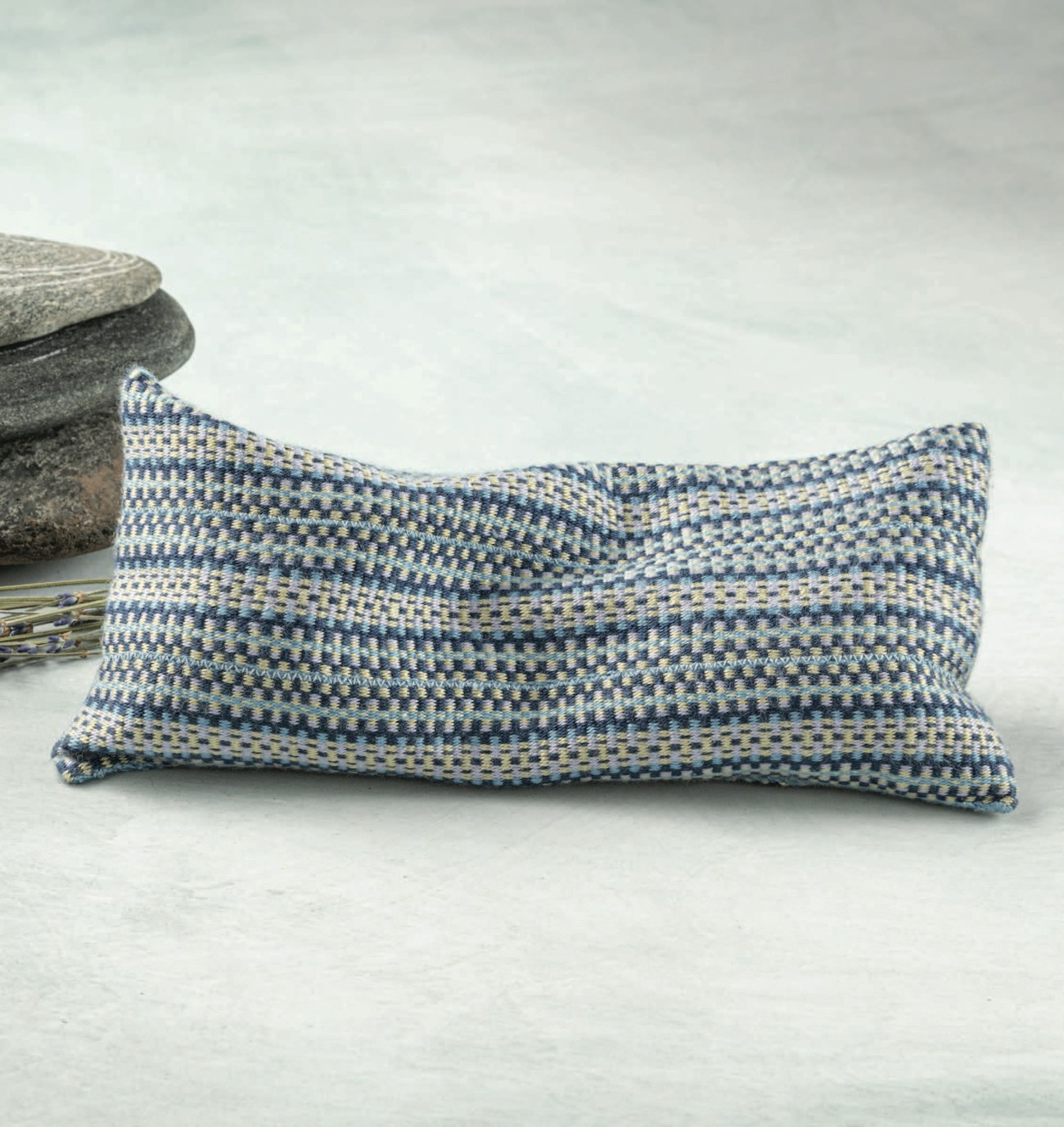
Jennifer B. Williams stuffed her inkle-woven Relaxation Eye Cover with dried lavender. Photo by Matt Graves
Using the Palette
You can find the palette for the issue here. Please note that black, white, and all natural shades of wool are considered part of the palette, and you are welcome to use yarns that are darker or lighter versions of the colors in the palette as well as heathered yarns.
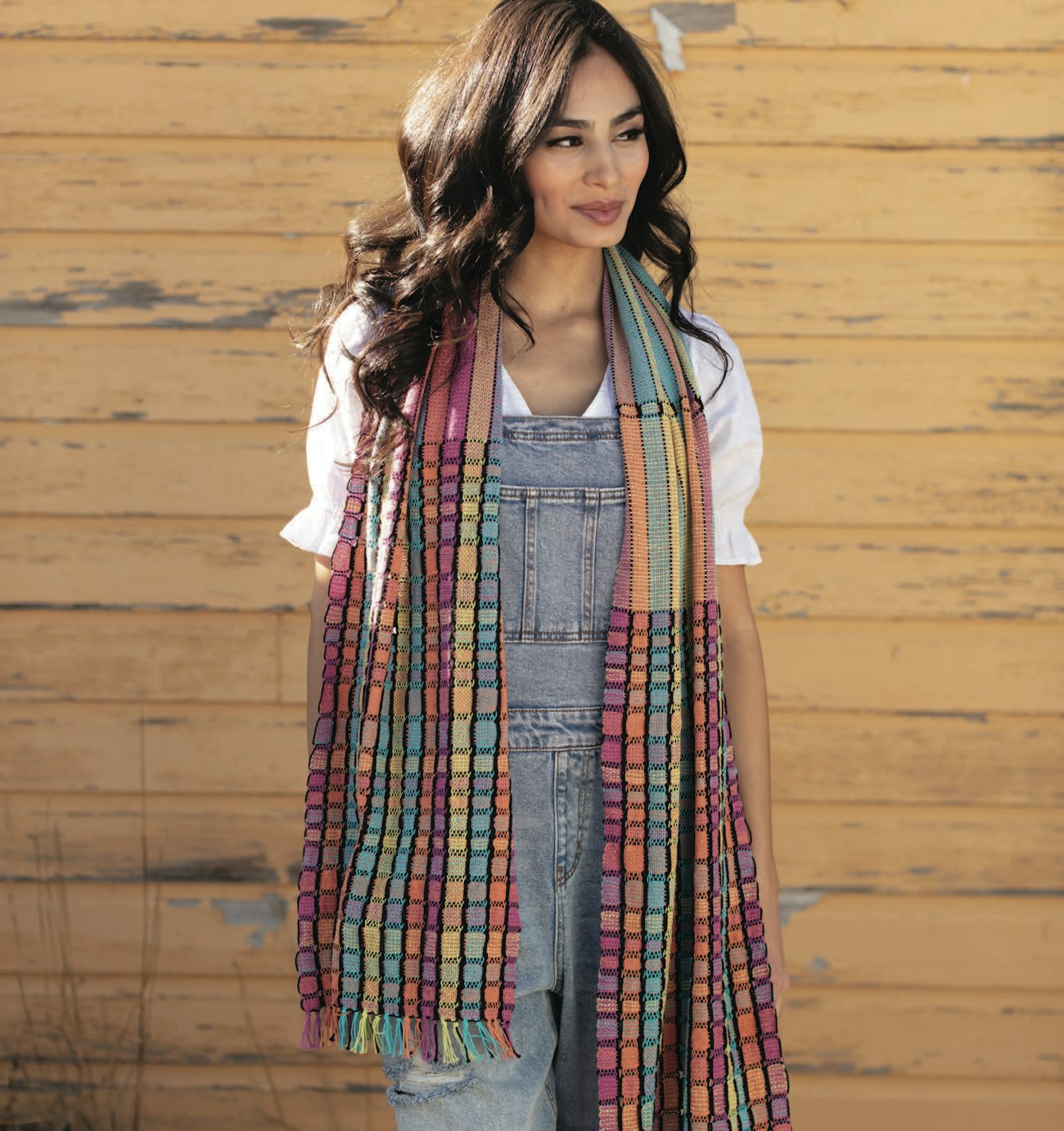
For her Butterfly Wings Scarf, Sara Goldenberg White found her inspiration in images of butterfly wings magnified to show the microscopic scales. Photo by George Boe
Articles and Tutorials
For this issue, we’d like to have articles and tutorials about the intersection of gardening and fiber arts. We’d love to have tutorials about weaving with plant material, dyeing with soil, planning a dye garden, eco-dyeing with flowers, and other similar topics. For articles and tutorials, only an outline is required for the initial proposal, although we do encourage you to send any images you might have to better support your proposal such as items you’ve dyed using flowers or baskets you’ve woven out of iris leaves.
Submitting Proposals
We base our project selections for each issue on contributor photographs. With each project proposal, please include a photo or photos of the finished item or of items you’ve woven that are most similar to the item you propose to weave for the issue. We will review the proposals and ask for additional photographs if needed. After the project-selection meeting, we will contact everyone whose project is accepted and ask that it be submitted along with the project paperwork.
Articles do not need to be written before proposing. Instead, please include the article’s outline as part of your proposal. Outlines should be submitted as attachments in Word documents, Pages documents, or as PDFs.
Key Dates
• Proposals for projects (including preliminary photos) and articles due: 2/21/2026
• Additional photographs of projects due: 4/20/2026
• Non-project article text and photographs due: 6/1/2026
• Physical projects with paperwork due: 6/1/2026
Submission Forms and other Resources
Please use our Little Looms submission form for proposals. Note that we’ve recently updated our submission guidelines, and they can now be found here.
Use the email address below for any questions or inquiries that won’t fit into our submission form. Please contact us and ask for a physical address to send any pieces of your proposal that cannot be emailed.
Editorial email: [email protected]
We are looking forward to seeing your proposals for projects and articles!
Happy weaving!
Christina