



Contents

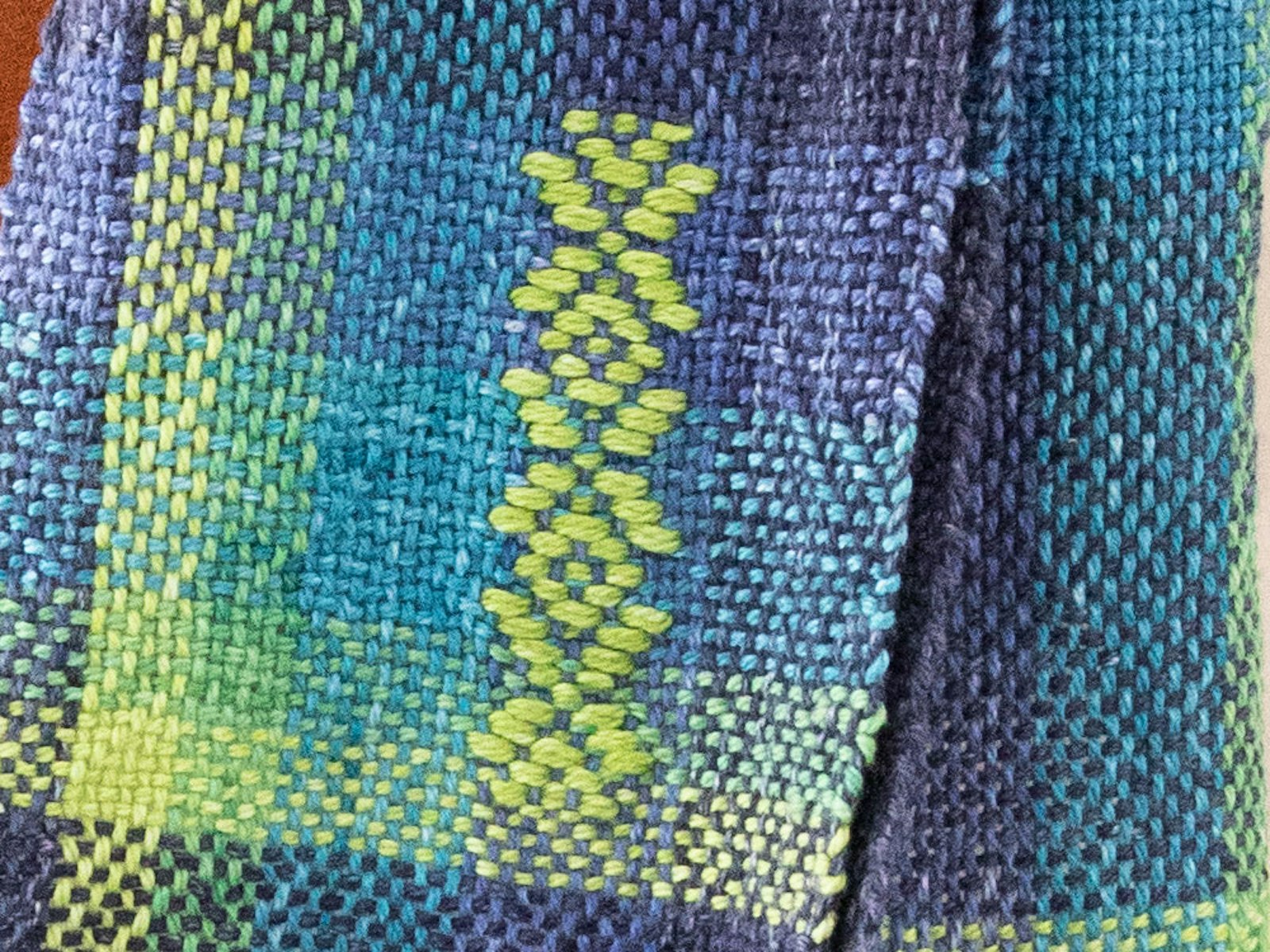
Inlay is a technique in which a second weft, called a pattern or supplemental weft, is laid in the warp between alternating picks of your primary weft (sometimes this is called a tabby or ground weft). It’s also one of my favorite techniques for adding visual interest to cloth—texture, pattern, color—without too much in the way of hand-manipulation.
In its most basic form, inlay is as easy as weaving plain weave, and even the more complicated versions aren’t that difficult. With inlay, you can add texture, shapes, and even areas of complex patterning pretty much anywhere in your cloth. Even better, it can be done on rigid-heddle, tapestry, and pin looms.
Today’s skill builder will give you a solid foundation. As you read, you’ll learn about:
- The benefits of inlay
- Multiple inlay techniques with step-by-step instructions
- Tips for turning charted patterns, such as cross-stitch charts, into inlay designs
Every item we’ve selected for this guide is part of your All Access program and will help you get the most out of your subscription. Check out the Little Looms Library and our video course website for more learning opportunities.
Happy Weaving,
Christina
Benefits of Inlay
Inlay as a design tool has so many benefits—here are just a few:
- Inlay can be placed anywhere in the warp—you don’t need to start or end at the selvedge—so you have complete control over your inlay design.
- You can use inlay to create shapes in your weaving using a cartoon under your warp, or you can weave freeform designs.
- Do you feel bad about throwing away thrums or small scraps of extra-special yarn? You can use them in inlay!
- Use inlay to add small areas of complex patterning such as overshot or twill into plain-weave cloth.
- You can do inlay on rigid heddle, tapestry, and pin looms.