




I first learned the Fibonacci sequence in seventh grade math class. I don’t remember much about those lessons, except that it had to do with predicting rabbit population. It wasn’t until years later that I learned how to use those same numbers to create beautiful, natural-looking asymmetric patterns. Understanding the basics of the Fibonacci sequence helped me become a better designer—and I know I'm not alone. It can be used to help create designs for rigid-heddle, inkle, pin loom, and tapestry projects. If you’re curious about Fibonacci or just looking for another design tool to add to your toolbox, frequent Little Looms designer Christine Jablonski has all the details in this excerpt from her article on math as a design tool from the Summer 2023 issue.—Christina
Say the word math in a room full of creatives, and you could very well find yourself facing a chorus of protestations along the lines of “I don’t do math,” “I’m not a numbers person,” or some variant thereof. Technically, what they are voicing is a discomfort with arithmetic (calculations of numbers) as opposed to math, which can be applied or pure, and includes algebra, geometry, calculus, trigonometry, statistics, and probability.
But math provides a mechanism to understand relationships and solve problems—the very things we do every time we sit at our looms. In fact, we probably already use math as a tool when designing projects without realizing it. I, for one, was shocked when I learned that my beloved Fibonacci sequence, which has served me so well through so many projects, is one of the first examples given in many calculus texts. Oh, the irony!
What is the Fibonacci Sequence?
Leonardo Bonacci, better known simply as Fibonacci, was an Italian mathematician who, in 1202, popularized a specific succession of numbers. Interestingly, this sequence had been referenced in Indian mathematics as early as 200 CE, but apparently Fibonacci had a better publicist.
The Fibonacci sequence is such that each number is the sum of the preceding two numbers: 0+1=1, 1+1=2, 1+2=3, 2+3=5, 3+5=8, 5+8=13, 8+13=21, and so on.
The first eight numbers in the Fibonacci sequence are then 1, 2, 3, 5, 8, 13, 21, 34.
Designs based on this order tend to be aesthetically pleasing, probably because we see these patterns every day. Tree branching systems, the arrangement of a flower’s petals and seed heads, the spiral of a seashell or a pinecone’s scales are just a few examples of how the natural world manifests this rule.
I based the first pattern I ever published on the Fibonacci sequence. To someone nervous about sending her first effort out into the world, it was a safe place to start, and by all accounts, the project was a success. Since then, his sequence has provided a foundation for many of my designs, although I’ve adapted it for weaving along the way.
Using Fibonacci in Weaving
When applying the Fibonacci sequence in weaving, you not only have numbers of units (ends, inches, or repeats) to work with, but you also have numbers of colors at your disposal. In my experience, choosing Fibonacci numbers for ends or picks that are different from the number of colors in the colorway makes a project more visually dynamic.
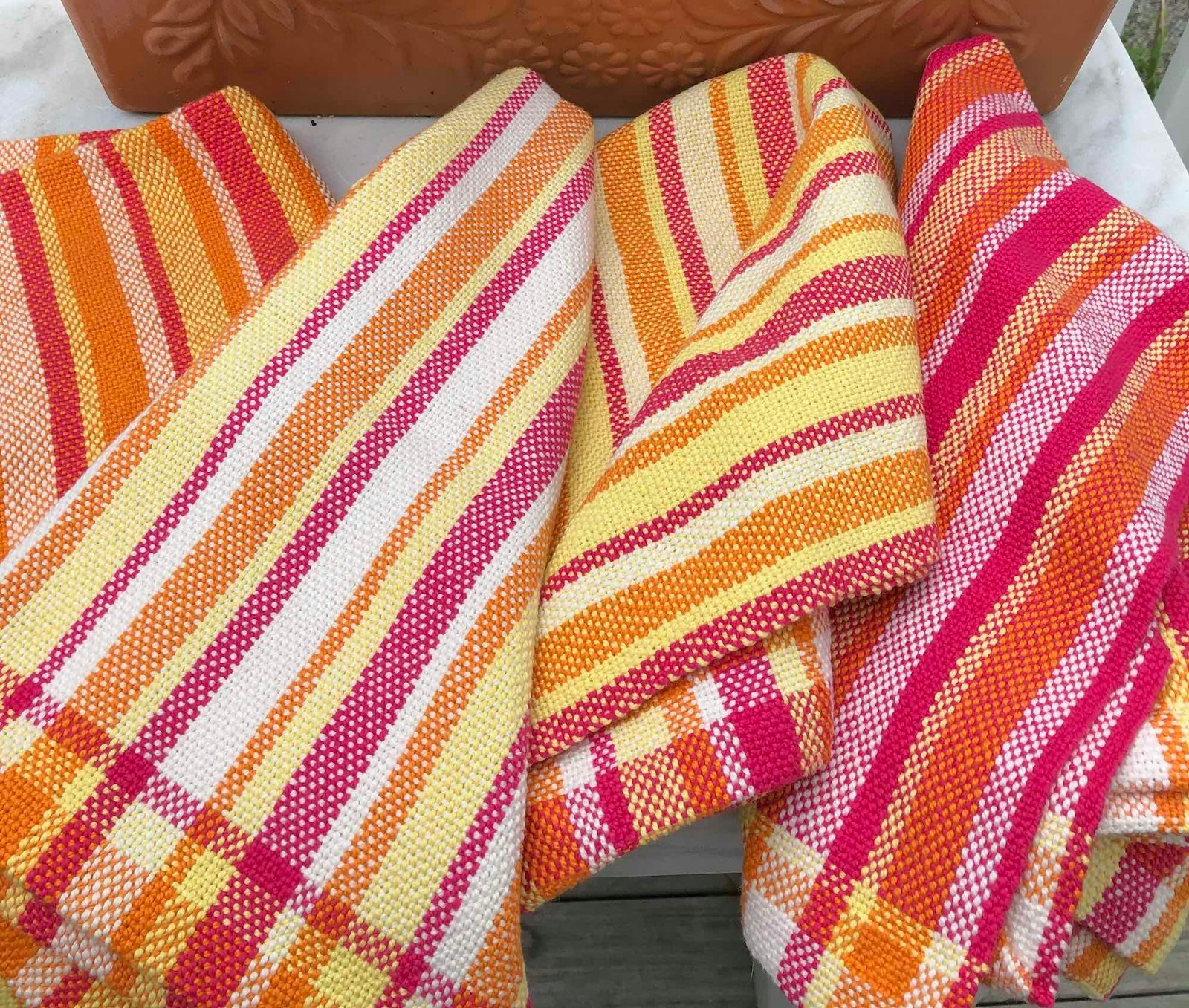
For example, when designing the warp for the towels shown in the header image, I chose to repeat three Fibonacci numbers (2, 3, and 5) as doubled ends on a rigid-heddle loom with four colors (natural, orange, yellow, and hot pink). While the width repeats are consistent, the colors do not often repeat with the same widths, which keeps the overall pattern more active than a simple repeat.
 You can mix up the Fibonacci numbers for a dynamic design, such as the one Christine developed for these placemats.
There’s no rule that says you must use the Fibonacci numbers in order, either. For the placemats shown above, I used six numbers (1, 2, 3, 5, 8, and 13) doubled as loops in the threading sequence over four colors (white, turquoise, light brown, and purple). However, I also assigned white as a single loop between each of the other colors, making the final sequence 2, 1, 3, 1, 5, 1, 8, 1, 13, 1 . . . with each color except for white threaded with a different number of ends over the course of the warp.
Stashbusting with Fibonacci
You can also just throw caution to the wind, pick a handful of Fibonacci numbers, and thread them in any order as I did with the stash-buster project shown still on the loom below. Fibonacci numbers get large quickly (21, 34, 55, 89 . . .), which is a terrific way to manage large color blocks and narrow stripes—especially if your stash contains a lot of some colors and a little of others.
 Even when you use a wide variety of numbers from the Fibonacci sequence in a piece, their relationships to each other will pull your design together.
The color order for this warp was somewhat random, based on how much of each color I had available and, honestly, which colors I thought looked better next to each other on the loom. I used Fibonacci numbers to determine the width of the stripes: 34, 2, 55, 8, 2, 34, 13, 13, 2, 13, 89 (ends, not loops).
This is only a cursory glance at the power of math and its intersection with design, but I hope the message is clear—math isn’t the problem; it’s more likely a solution. Approaching numerical sequences as relationships and ways to solve problems gives you an incredible tool that you can manipulate to create amazing patterns. I bet Fibonacci would have designed some great projects!
Next Steps and Projects
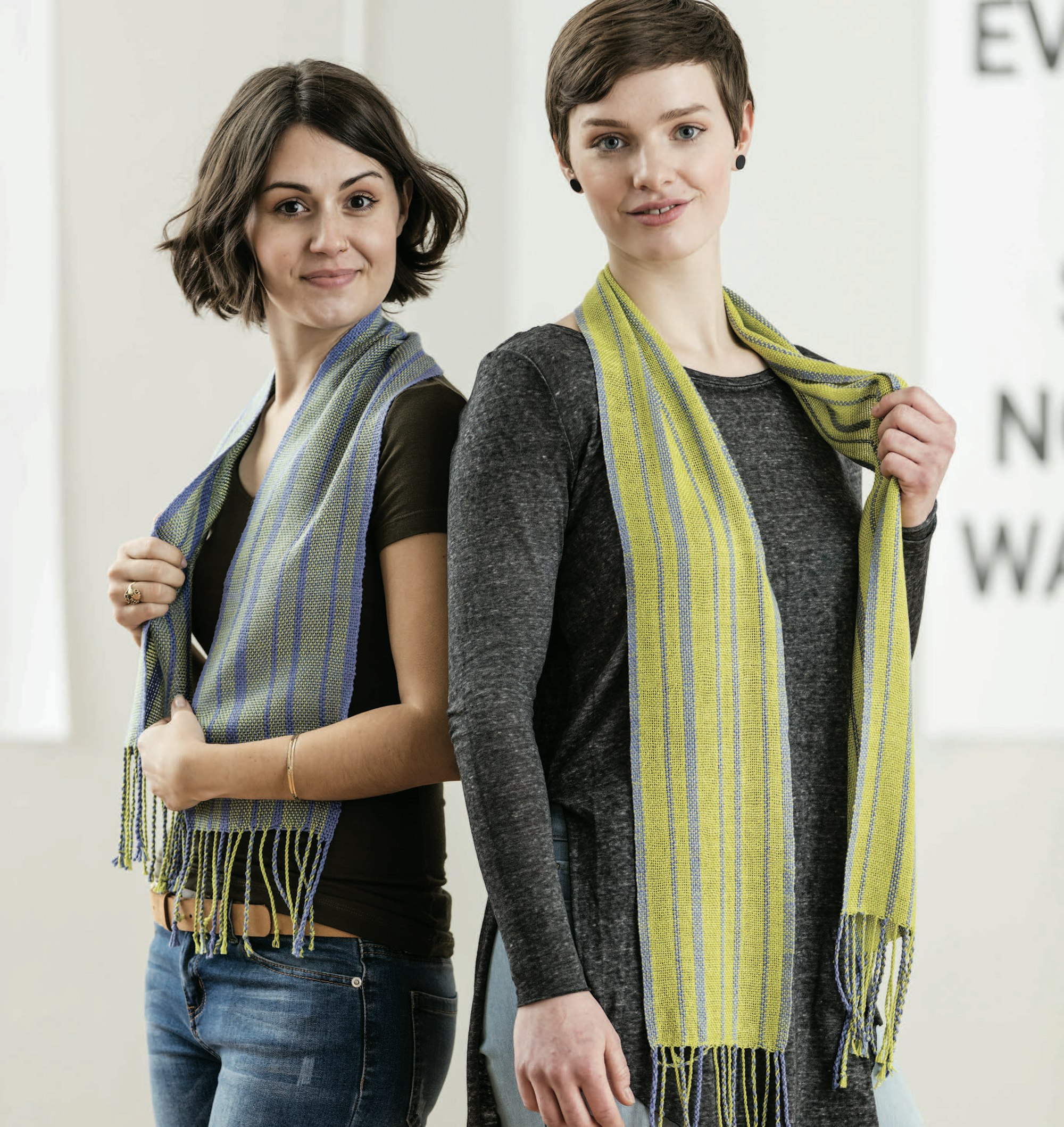
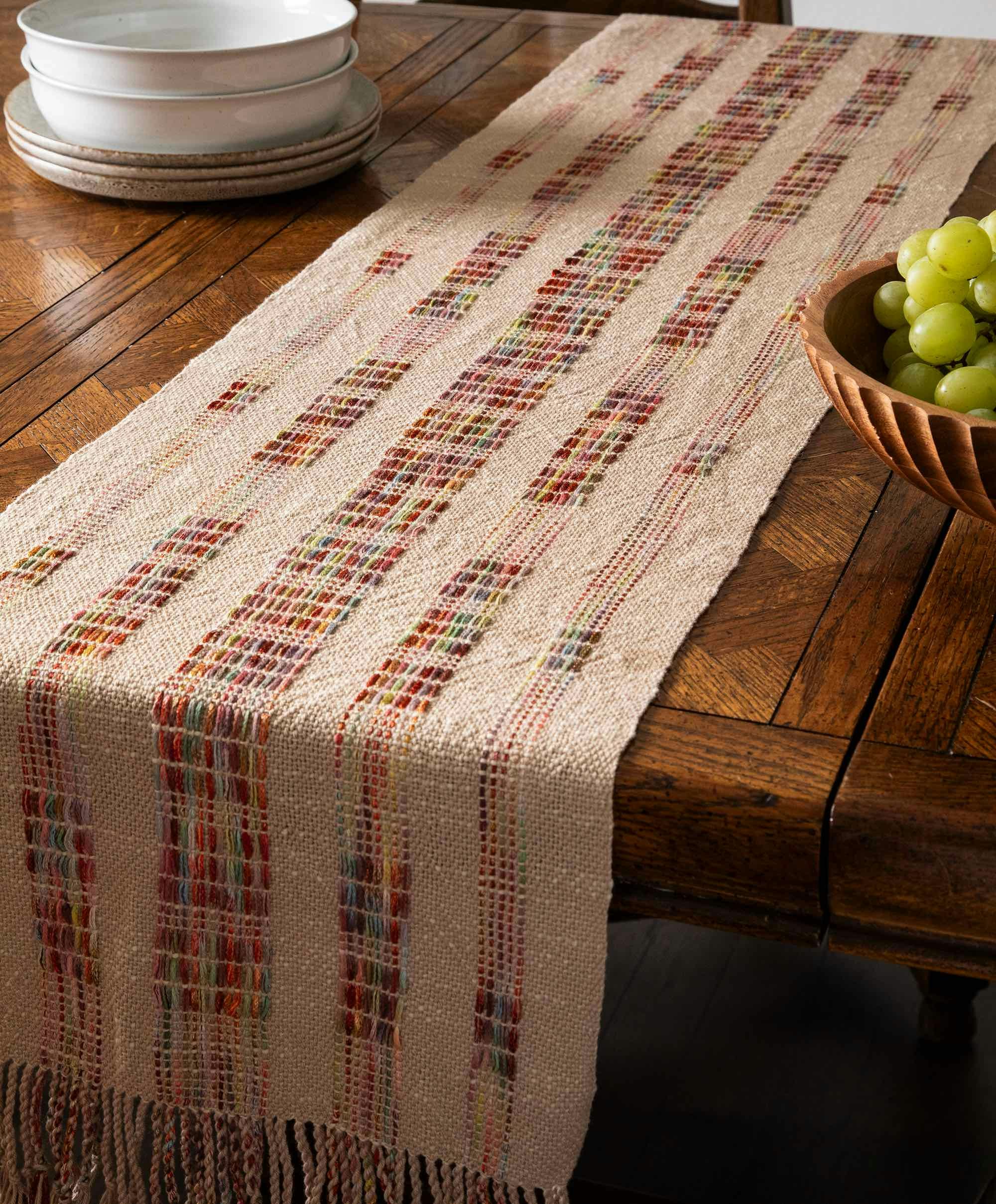
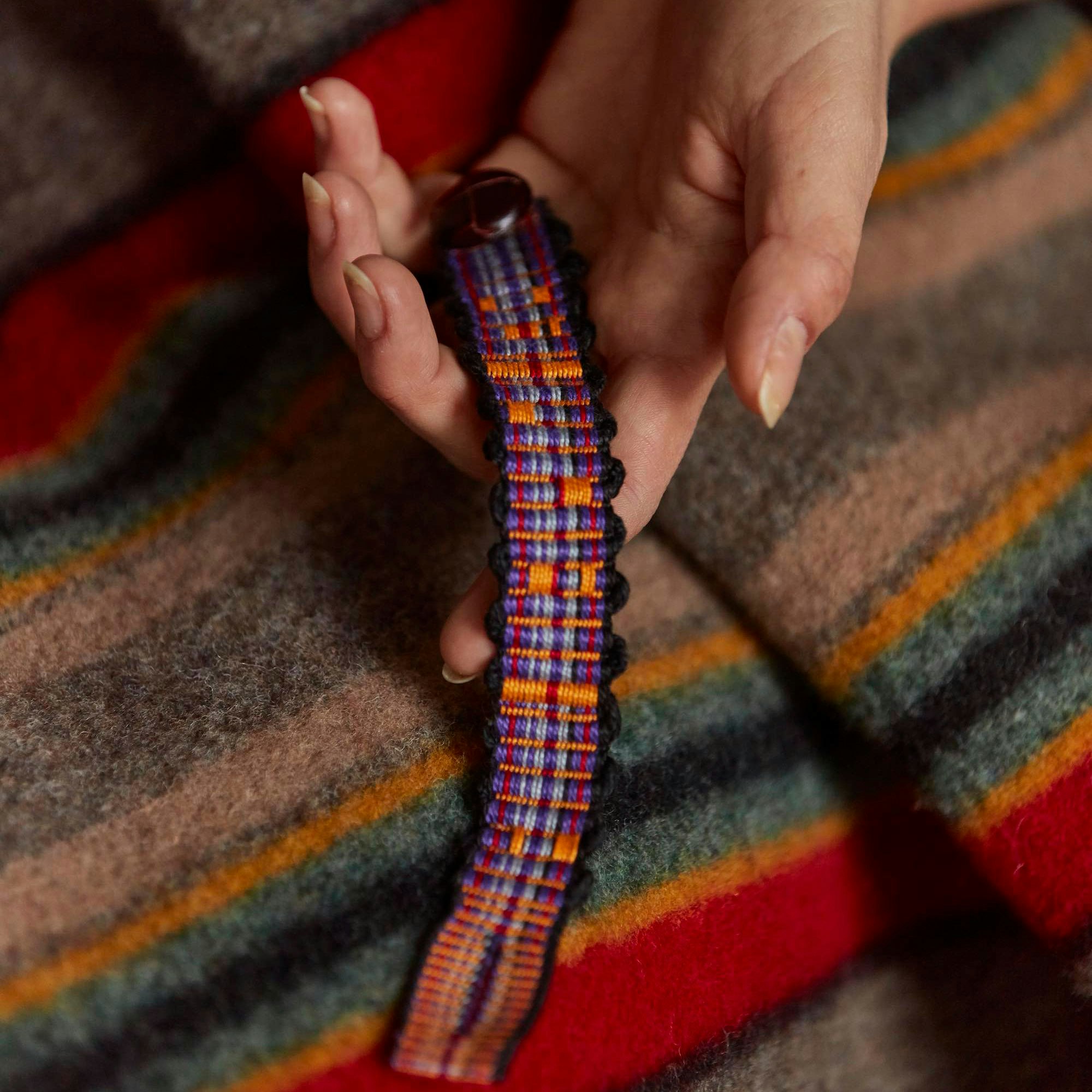
Just a few of the projects featured in Little Looms over the years that use Fibonacci numbers in their designs. From left to right: Fibonacci Sequence Scarves by Margaret MacMorris, Little Looms 2017; the Mountain Sunset Bracelet by Ellen Labruce, Little Looms 2019; and the Dots and Dashes Runner by Dana Lutz, Little Looms Summer 2025. Click each photo to see a larger image and get more information on each project.
Looking for a project to get you started on your journey with Fibonacci? Don’t worry! We’ve got you covered. Try weaving of the projects shown above and linked below, or use these designs as a jumping off point for your own original creations. And to read about other ways you can use math as a design tool, make sure to check out the rest of Christine’s article in Little Looms Summer 2023.—Christina