Subscriber Exclusive
Weave a Freestyle Bag
Freestyle weaving might sound intimidating, but once you know the rules, it can open up a world of creative possibilities.
Freestyle weaving might sound intimidating, but once you know the rules, it can open up a world of creative possibilities. <a href="https://littlelooms.com/weave-a-freestyle-bag/">Continue reading.</a>
https://littlelooms.com/cdn-cgi/image/format=auto/https://www.datocms-assets.com/70931/1787247752-july-bag-of-month-crop-header-2x_new.jpg?auto=format&w=900
Feeling a bit of weaver’s block? Try kickstarting your creativity with a bit of freestyle weaving. I know a lot of weavers aren’t comfortable with the idea of intuitive, unplanned weaving—I used to feel the same way ... until I learned that sometimes intuitive weaving is easier when you set specific boundaries.
Give Yourself Guidelines
I know, I know—this sounds like the absolute antithesis of freestyle weaving, right? Well, think about other freeform artistic endeavors such as freestyle dancing or improv comedy. They all have guidelines or basic parameters designed to help the artist—why should freestyle weaving be any different?
How much and what kind of limits you set on your weaving is completely up to you. If you’re weaving towels, for example, you might limit yourself to specific cotton yarns and weaving techniques that won’t leave you with long floats. You can decide on a weave structure ahead of time and choose your weft in a spontaneous manner, or vice versa.
Freestyle Rag Weaving
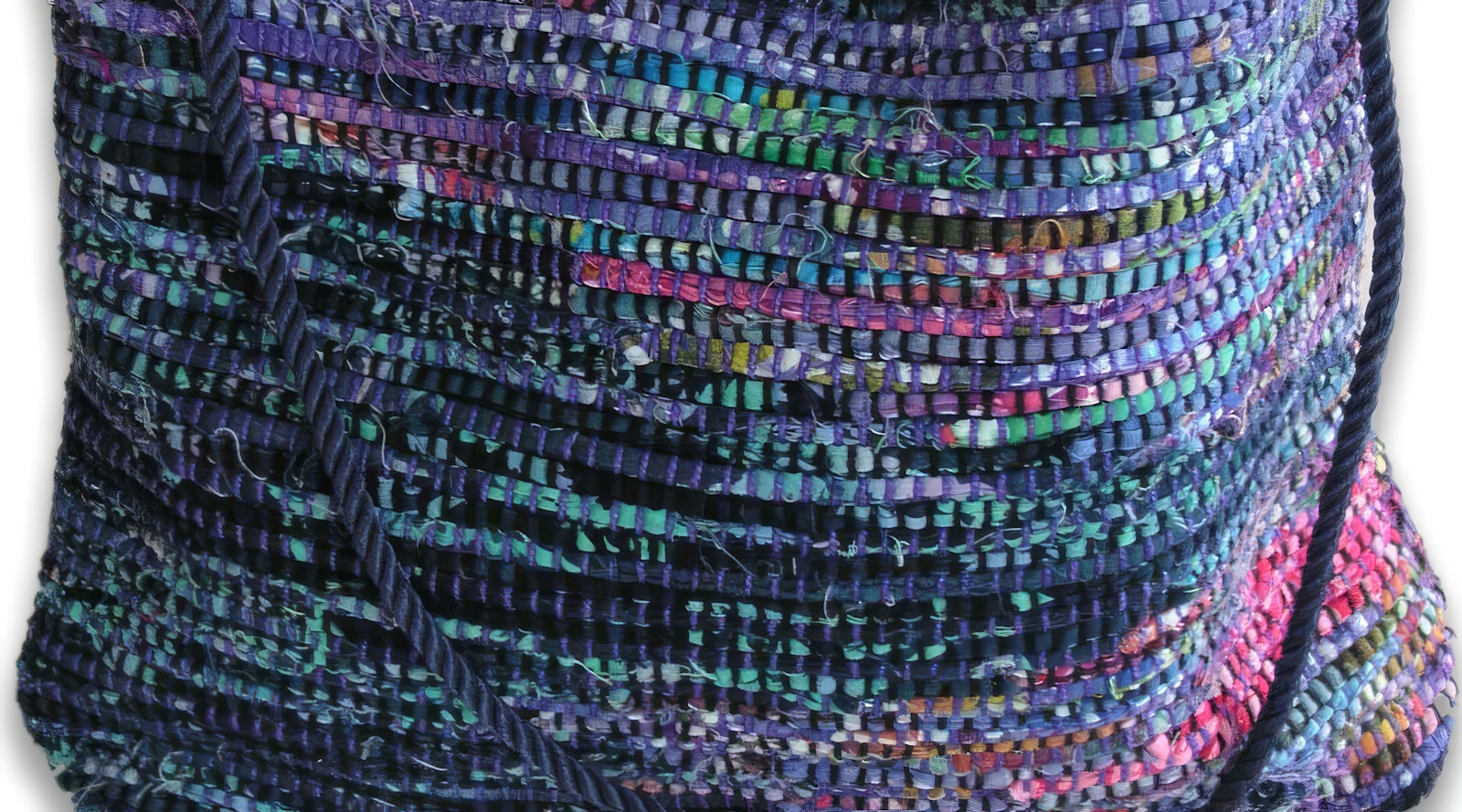
 For her shoulder bag, Dinah Rose chose strips of weft at random and used the clasped-weft technique to create patterning and interesting color changes in her cloth.
For example, in her project Rag-Weaving for a Shoulder Bag, designer Dinah Rose knew she wanted to make a plain-weave fabric out of rags. For her rag weft, she used strips of cotton cloth, featuring a variety of different colors and patterns. As she wove, she picked strips at random, using the clasped-weft technique to create patterning without sacrificing stability.
The result is beautiful—the bag’s fabric has a very painterly, organic look to it. Colors shift and change in interesting ways. It’s the kind of project that invites you to take a closer look as you think, “How on earth did she weave that?” The reason Dinah's approach to freestyle weaving worked so well is because she began with a few basic guidelines:
- Dinah limited her weft options to fabrics that coordinated well together.
- The weft strips were kept intentionally short so Dinah had to frequently change out her wefts.
- Using only plain weave and clasped weft allowed her to create a stable fabric for her bag—and kept the colorful rag strips as the focus of the fabric.
If you’re curious about freestyle weaving, you’re in luck. We’ve got Dinah’s bag project available as a subscriber-exclusive download. (Not a subscriber yet? Learn about the different subscription tiers and their benefits here) You’ll learn how she approached her bag design as well as how she turned her handwoven cloth into the finished item. The bag is relatively small so it’s perfect for using up rags leftover from previous project or small amounts of cotton fabric that you just can’t bear to throw away. You can follow the same guidelines she did, or make up some of your own.
Whether or not you weave your own bag, I do recommend giving freestyle weaving a try. Next time you put on a warp, add a little extra, set your parameters, and see where you end up.
Happy Weaving!
Christina
Project Details
Weave structure: Plain weave with clasped weft.
Equipment: Rigid-heddle, 2-shaft, or 4-shaft loom, 15" weaving width; 10-dent reed or heddle; 1 or 2 stick or ski shuttles; sewing machine.
SUBSCRIBER EXCLUSIVE
Feeling a bit of weaver’s block? Try kickstarting your creativity with a bit of freestyle weaving. I know a lot of weavers aren’t comfortable with the idea of intuitive, unplanned weaving—I used to feel the same way ... until I learned that sometimes intuitive weaving is easier when you set specific boundaries.
Give Yourself Guidelines
I know, I know—this sounds like the absolute antithesis of freestyle weaving, right? Well, think about other freeform artistic endeavors such as freestyle dancing or improv comedy. They all have guidelines or basic parameters designed to help the artist—why should freestyle weaving be any different?
How much and what kind of limits you set on your weaving is completely up to you. If you’re weaving towels, for example, you might limit yourself to specific cotton yarns and weaving techniques that won’t leave you with long floats. You can decide on a weave structure ahead of time and choose your weft in a spontaneous manner, or vice versa.
Freestyle Rag Weaving
For her shoulder bag, Dinah Rose chose strips of weft at random and used the clasped-weft technique to create patterning and interesting color changes in her cloth.
For example, in her project Rag-Weaving for a Shoulder Bag, designer Dinah Rose knew she wanted to make a plain-weave fabric out of rags. For her rag weft, she used strips of cotton cloth, featuring a variety of different colors and patterns. As she wove, she picked strips at random, using the clasped-weft technique to create patterning without sacrificing stability.
The result is beautiful—the bag’s fabric has a very painterly, organic look to it. Colors shift and change in interesting ways. It’s the kind of project that invites you to take a closer look as you think, “How on earth did she weave that?” The reason Dinah's approach to freestyle weaving worked so well is because she began with a few basic guidelines:
- Dinah limited her weft options to fabrics that coordinated well together.
- The weft strips were kept intentionally short so Dinah had to frequently change out her wefts.
- Using only plain weave and clasped weft allowed her to create a stable fabric for her bag—and kept the colorful rag strips as the focus of the fabric.
If you’re curious about freestyle weaving, you’re in luck. We’ve got Dinah’s bag project available as a subscriber-exclusive download. (Not a subscriber yet? Learn about the different subscription tiers and their benefits here) You’ll learn how she approached her bag design as well as how she turned her handwoven cloth into the finished item. The bag is relatively small so it’s perfect for using up rags leftover from previous project or small amounts of cotton fabric that you just can’t bear to throw away. You can follow the same guidelines she did, or make up some of your own.
Whether or not you weave your own bag, I do recommend giving freestyle weaving a try. Next time you put on a warp, add a little extra, set your parameters, and see where you end up.
Happy Weaving!
Christina
Project Details
Weave structure: Plain weave with clasped weft.
Equipment: Rigid-heddle, 2-shaft, or 4-shaft loom, 15" weaving width; 10-dent reed or heddle; 1 or 2 stick or ski shuttles; sewing machine.[PAYWALL]
Yarns:
Warp: 5/2 pearl cotton (2,100 yd/lb), black, 263 yd.
Weft: about 50 yd of 1⁄2" fabric strips from two or more coordinating fabrics.
Notions and other materials: ½ yd lining fabric, matching sewing thread, 1¾ yd braided upholstery trim, button.
Warp: 10 epi (1/ dent in a 10-dent reed).
Width in the reed: 15".
Weft: 5 ppi.
Woven length (measured under tension on the loom): 25".