

Contents
The 4" square pin loom might be the most well-known, but pin looms come in a wide variety of shapes and sizes. You can also regularly find projects that use hexagons, rectangles, and triangles within the project pages of Easy Weaving with Little Looms. These looms can range from quite small—think an inch or so—to looms so large they probably no longer qualify as “little looms”—like a triangle loom that weaves a full-size shawl!
Why Different Sizes and Shapes?
Different loom sizes can make it fun to mix and match woven shapes to create larger pieces. You can combine pin-loom shapes with others that have sides of the same length (a 4" square and a 4" equilateral triangle, for example) or use them on their own. Square pin looms are an amazing tool, but there are also hexagons, diamonds, and even jewel-shaped pentagon looms that offer even more opportunities for design and play.
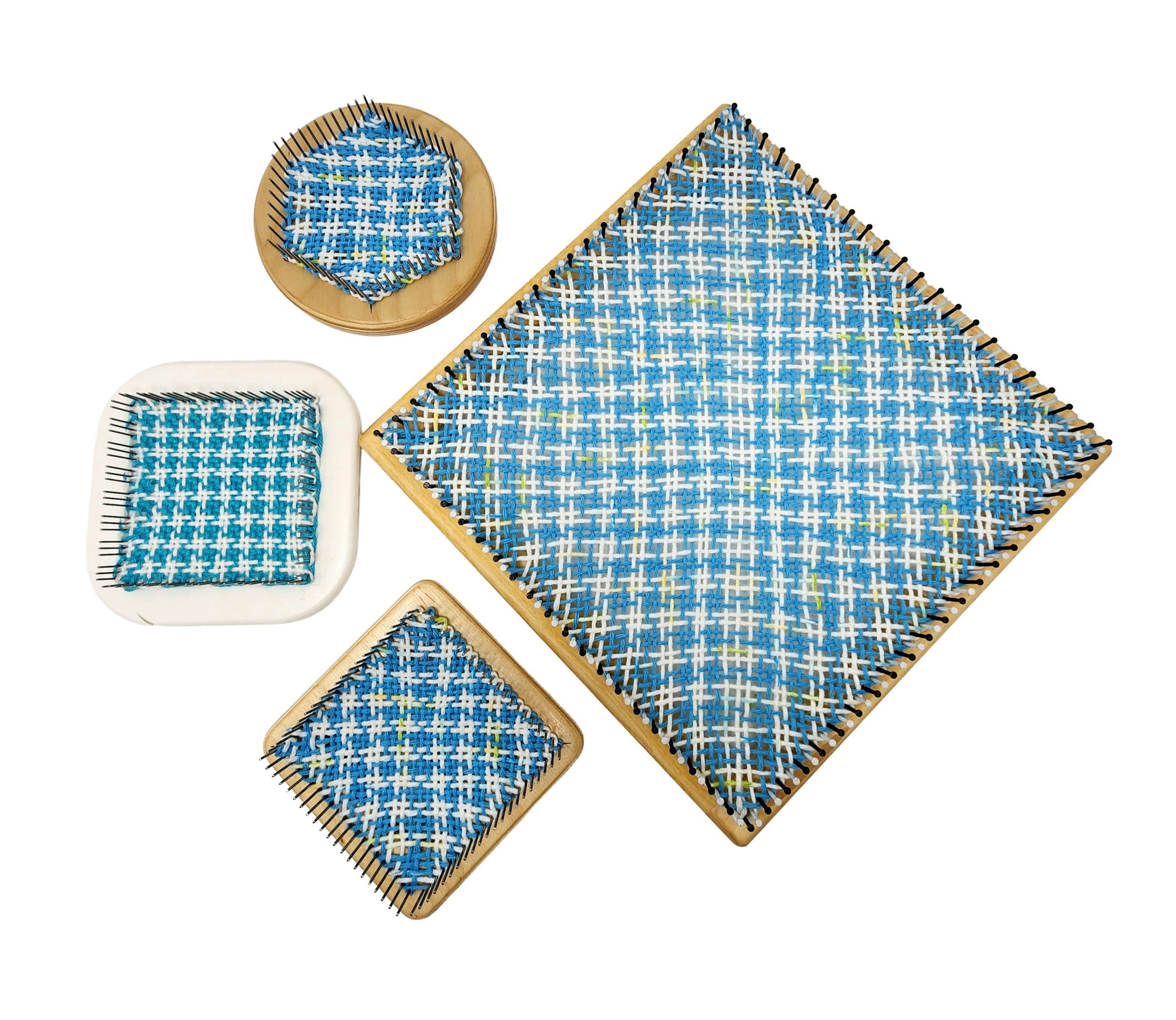
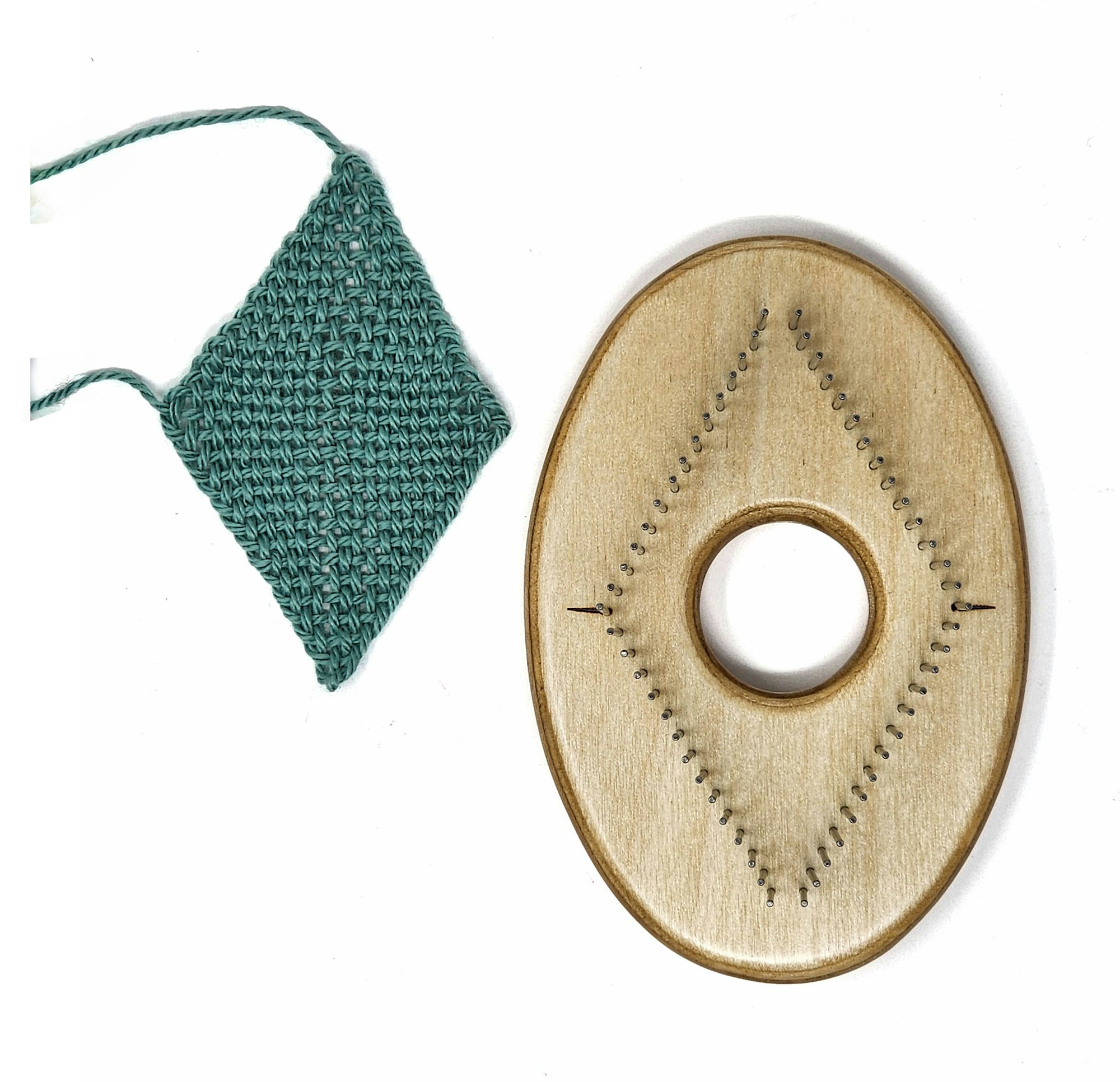
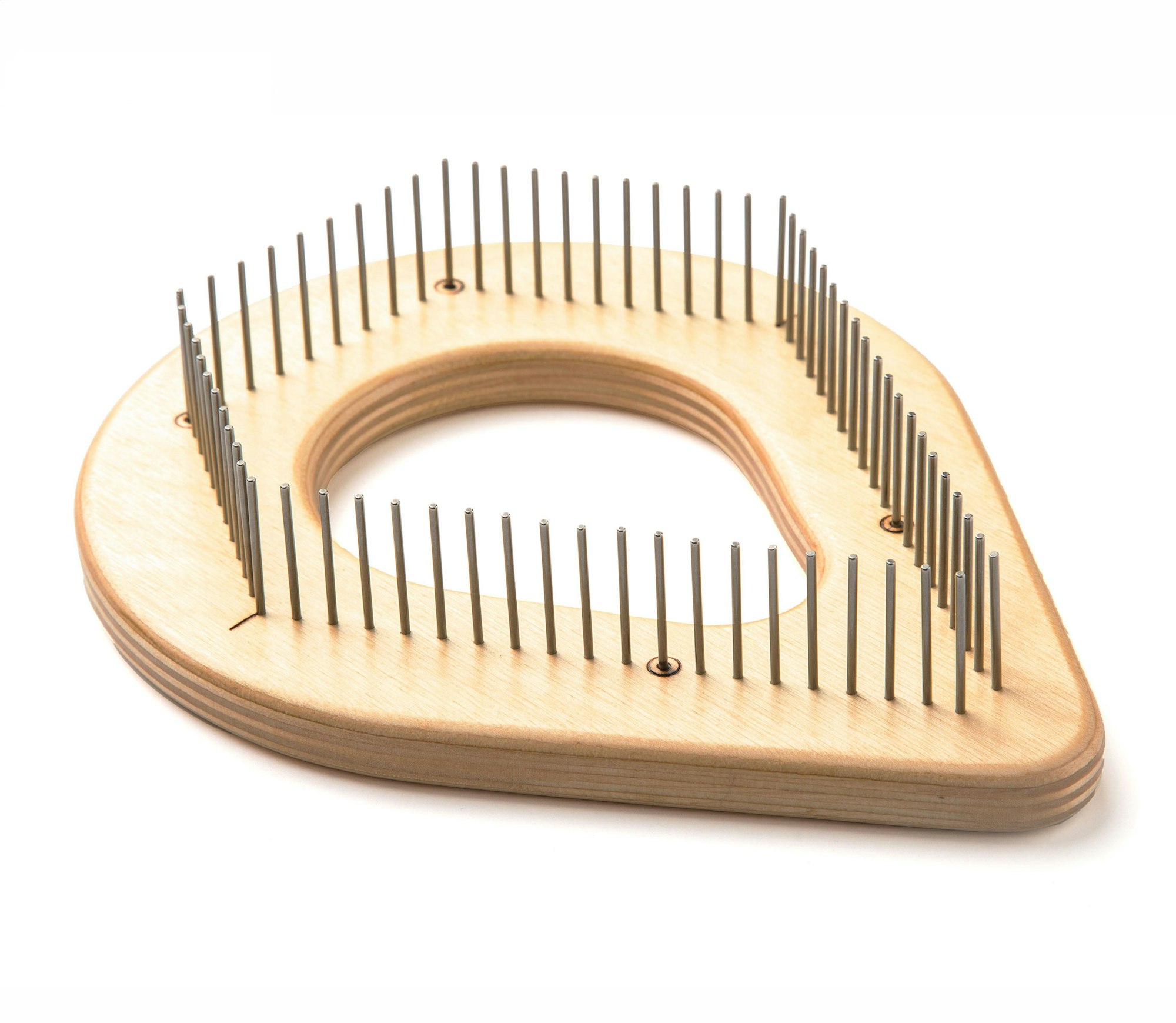
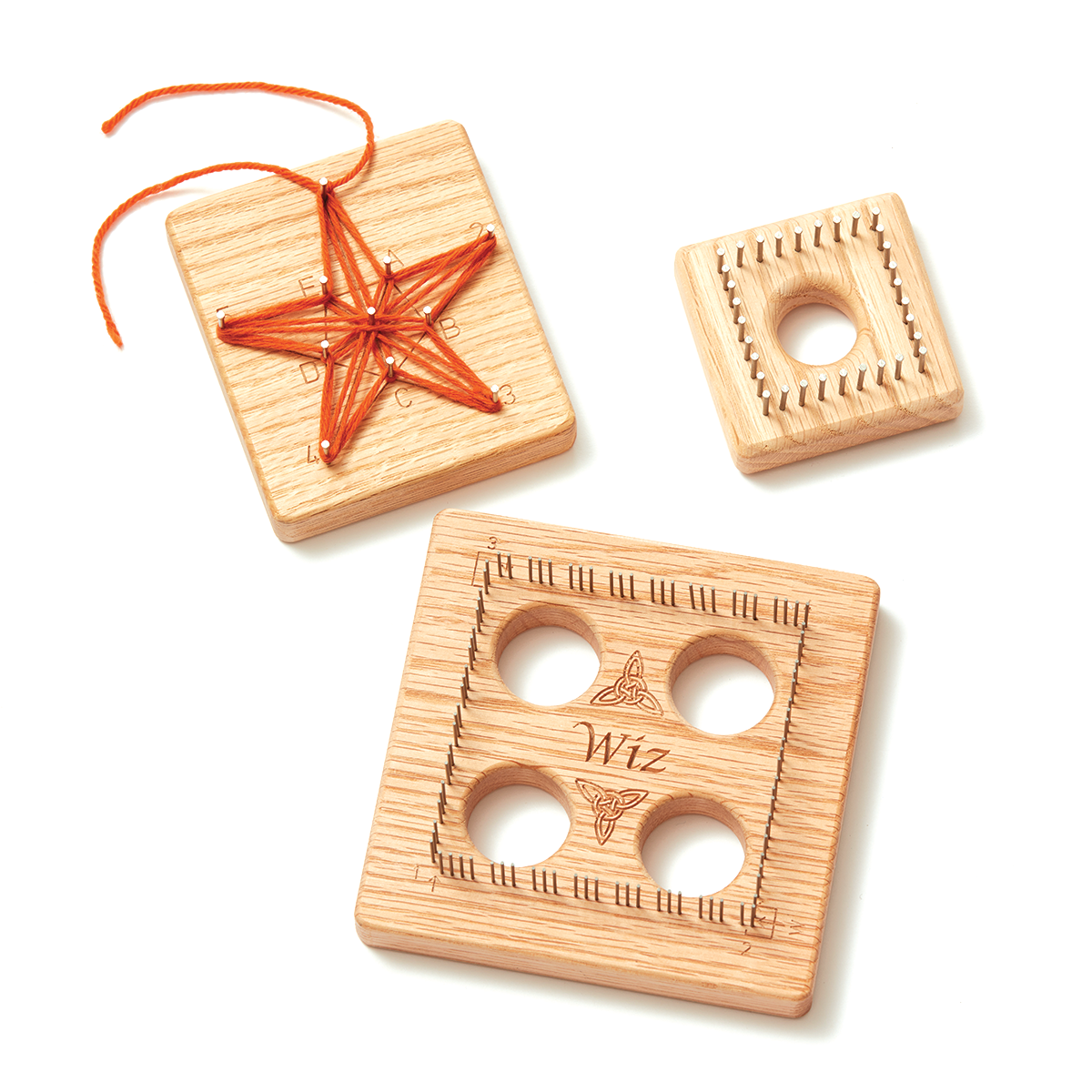
From squares to diamonds to stars, there are so many shapes to choose from!
Along with the shapes mentioned above, you can also find more eclectic shapes including hearts, stars, and even dragonflies. These looms are meant more for creating small accessories or pieces for embellishing a cloth.
What Does Sett Mean for Pin Looms?
Beyond size and shape, one other feature that can vary between looms is the sett. Sett refers to the number of threads in either warp or weft within a set unit of measurement. When talking about cloth woven on other types of looms, you’ll hear it referred to as “ends per inch” (warp) or “picks per inch” (weft). With a pin loom, sett is determined by how close the pins are to one another. The closer the pins, the finer the threads needed, and the higher the possible sett.
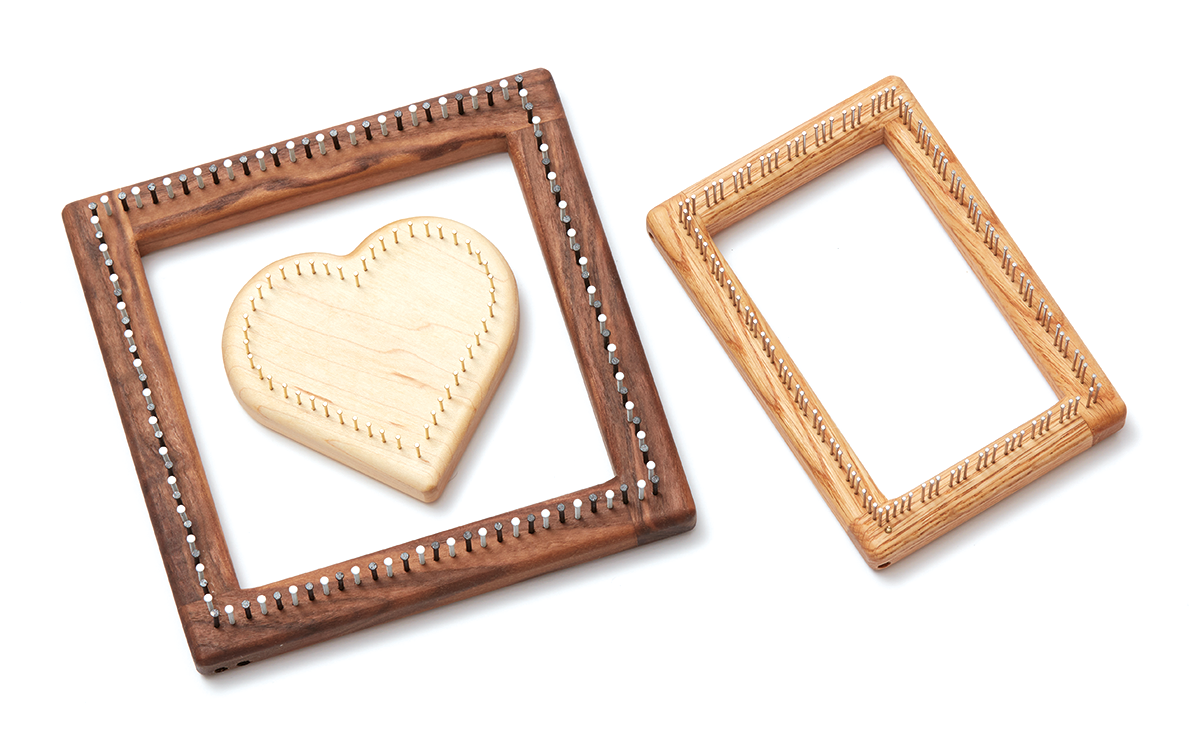
This shows many different sets, and the closer the pins are together, the finer the yarns you’ll weave with.
Weaving Differences Between Looms
One last major difference between looms is how you can weave on them.
Many square looms have a 3-pin configuration. With this style of loom, you lay down 3 layers of yarn (2 warp, 1 weft), then use a needle to weave in the final weft layer. Learn how to weave on one in this article.
Some square looms and most other loom shapes use continuous-strand weaving, sometimes called bias weaving. With this style of weaving, you’ll warp and weave in the weft at the same time. (When in doubt as to what your loom is designed for, always check the loom manufacturer’s directions.)
Pin looms of all shapes and sizes are great fun to weave on and open a nearly endless world of design possibilities.
Up Next: Read this article to learn more about choosing pin looms and dispel some of the common myths about them.
Happy weaving!
Christina