



Contents
I’m a sucker for anything that sparkles. Maybe it’s because I’m a millennial who grew up in the glory days of body glitter, maybe I’m part magpie. Either way, I like to look for fun ways to incorporate metallic, iridescent, and other glittery yarns into my weaving. When you’re adding these types of yarns to your weaving, there are a few approaches you can take, and which one is right depends on your choice of metallic yarn, the loom you’d like to use, and your vision for the final item.
Metallic Yarn 101
First a key note:
When I use the term “metallic yarn” in this article, I’m using it to refer to not just traditional metallic yarns and threads, but also iridescent yarns and sequined yarns. I could probably write a whole series of articles about all the different types of metallic yarns out there, but for now let’s talk basics. Most metallic yarns get their shine from polyester. While there are some that use actual metal components (I’ve seen some gimp yarns that use silver and gold), the majority of metallic yarns are made up of either entirely polyester or a blend of polyester and other fibers.
Why is this important? Polyester does not shrink, so if you want to combine metallic threads that are mostly or entirely polyester with fibers that will shrink or full, you need to be wary of differential shrinkage. When in doubt, sample!
Metallic yarns come in a wide variety of sizes—including some as fine as sewing thread—and styles. I’ve seen metallic ribbon yarns, bouclés, eyelash yarns, ladder yarns, chain yarns, and so much more. When choosing the specific yarn you’d like to use, you’ll want to make the same considerations you’d make for any yarn:
- Suitability for warp vs weft
- How it would feel next to skin
- How well it will drape
You’ll also want to ask yourself how much of a metallic effect you want in your final item. Some yarns are completely metallic, while other yarns have a relatively small metallic component.
Use All or Mostly Metallic
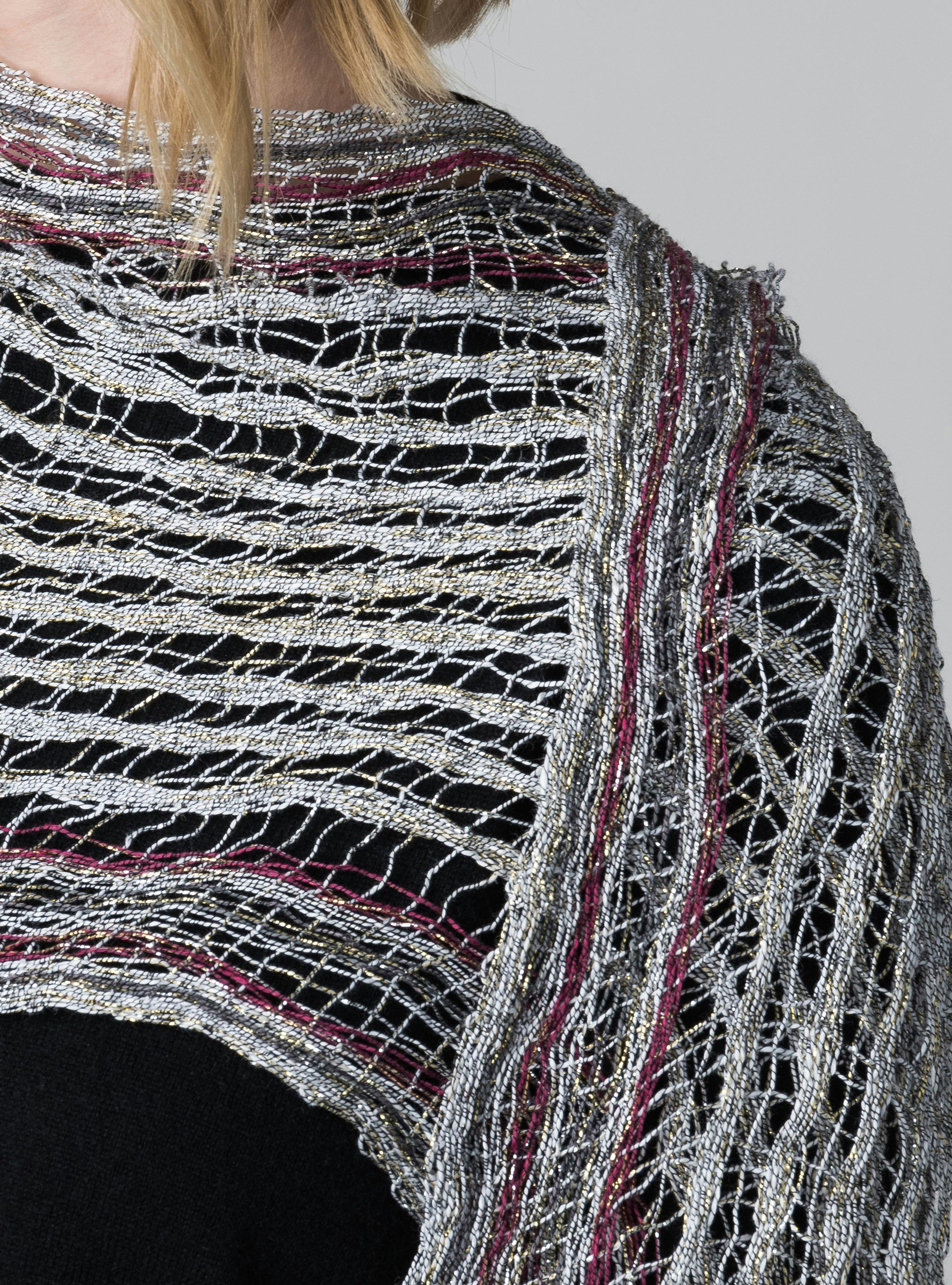
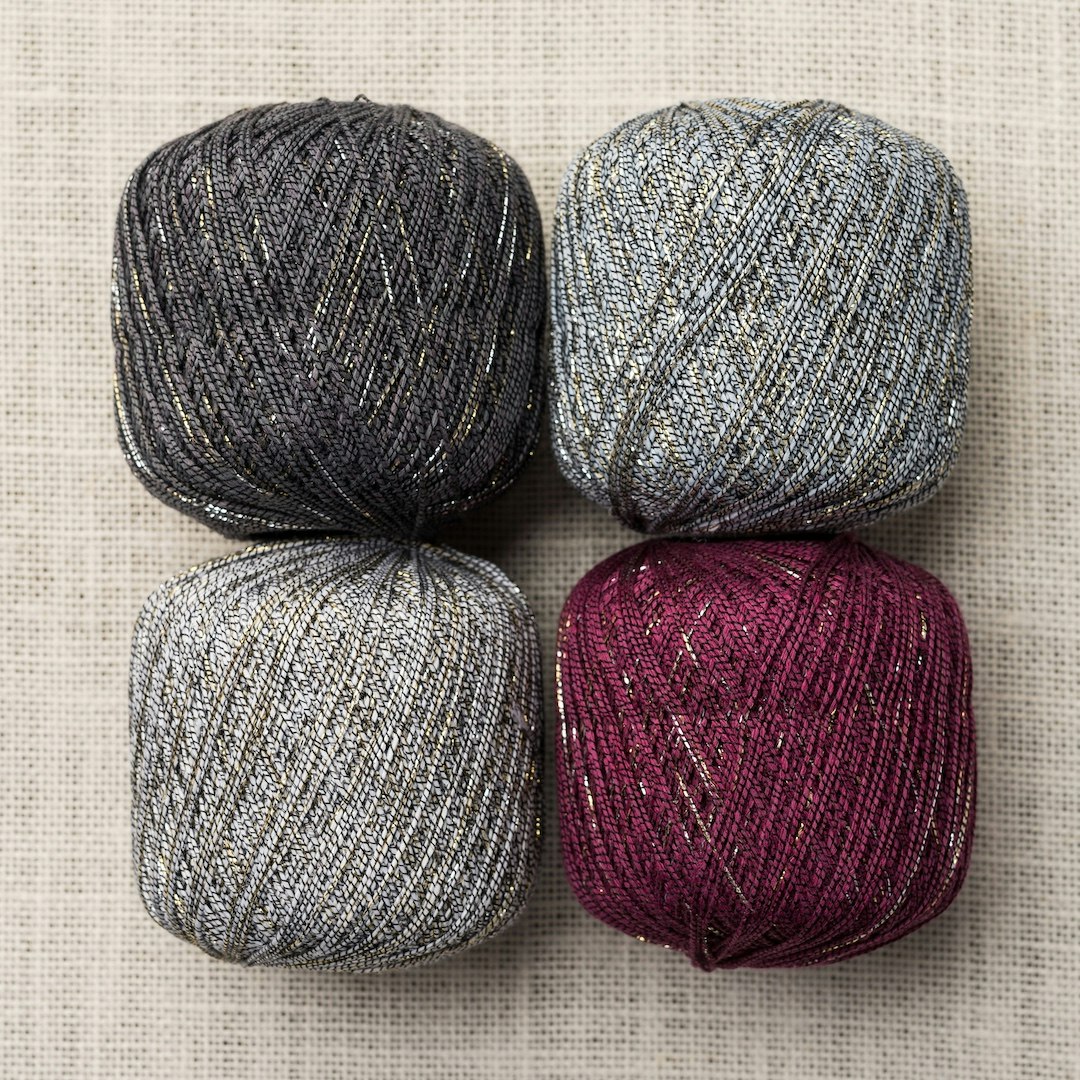
In her Sparkle Nation Scarf, designer Amy Gunderson used a metallic yarn made from a blend of linen, cotton, nylon, and a small amount of metallic. Click on the photos in the gallery to get a closer look and more information. Photos by Caleb Young (Good Folk Photography)
The first and the seemingly simplest option for using metallic yarn is to use it in both the warp and weft. In her Sparkle Nation Scarf from Loom Theory Vol. III (above, left), designer Amy Gunderson did just that.
The key to success in weaving a purely metallic item is to make sure the yarn will work in both the warp and the weft—consider both strength and elasticity when choosing a yarn for the warp. If you’re making a wearable, you’ll also want to make sure the yarn will feel nice when worn next to the skin. For her shawl, Amy used a blend made from mostly linen and cotton with only a small amount of metallic, which you can see above. The touch of metallic gives the shawl plenty of sparkle while the other fibers make for a more pleasent weaving and wearing experience.
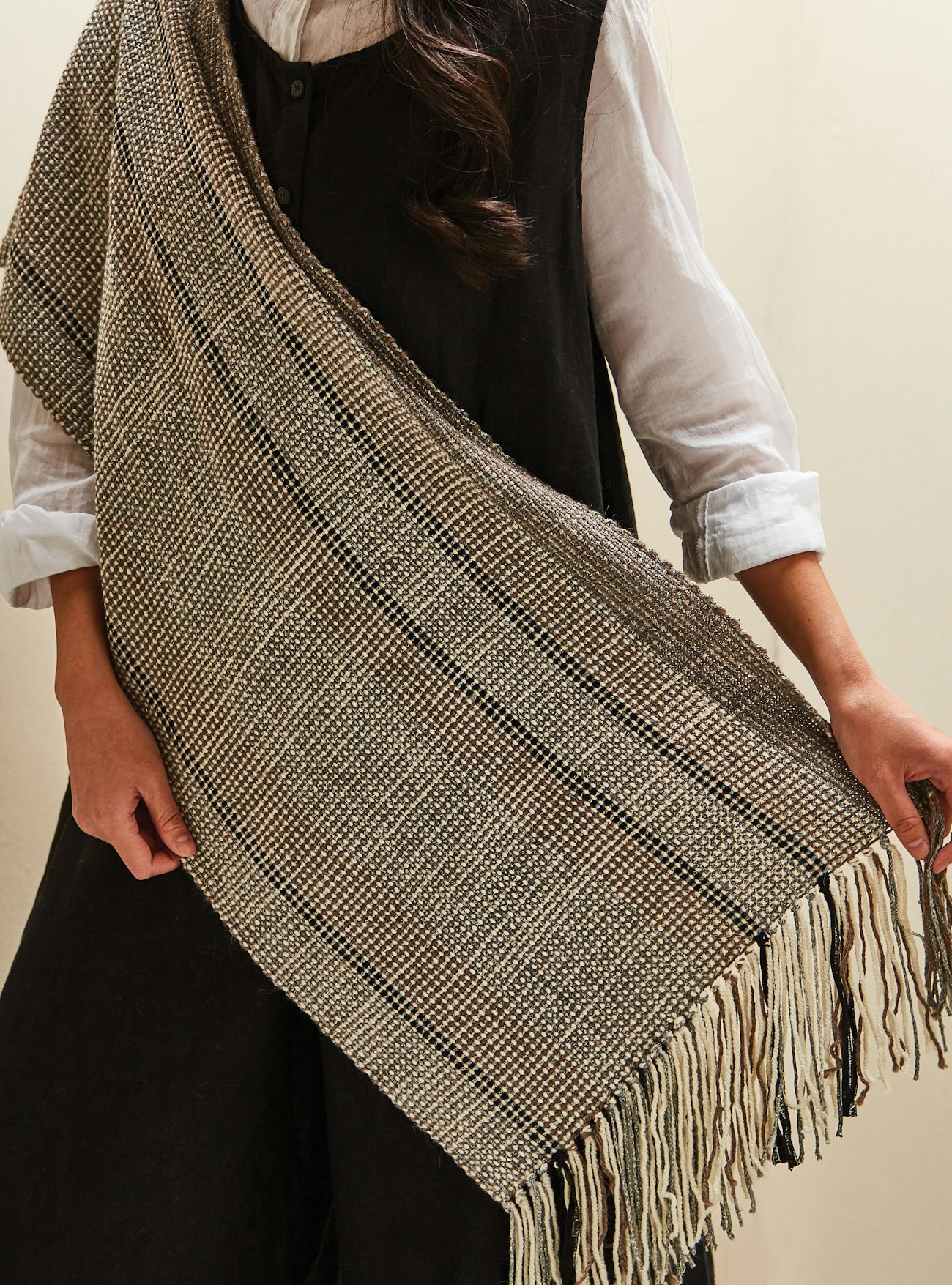
If you'd rather not use all metallic yarn, you can limit it to just the warp, just the weft, or pair it with a non-metallic as part of a color-and-weave pattern. A great example of the latter is Sara Goldenberg White’s Glitz and Glamour Color-and-Weave Shawl from Little Looms 2018. Sara alternated between a metallic and a wool yarn through the warp and weft. She also used different colors of wool in the warp, adding extra depth to her design.
Use Metallic as an Accent
Rigid Heddle
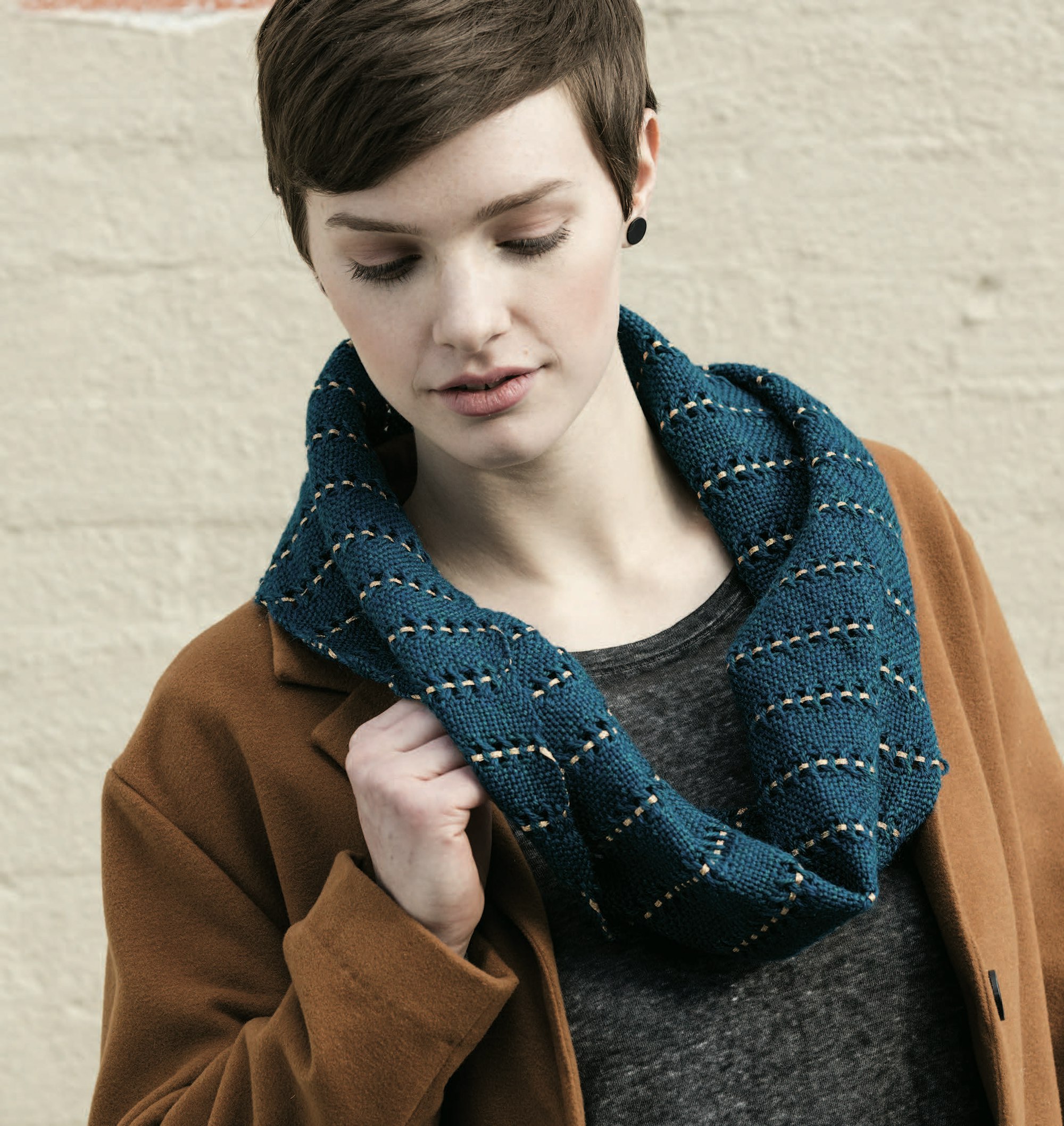
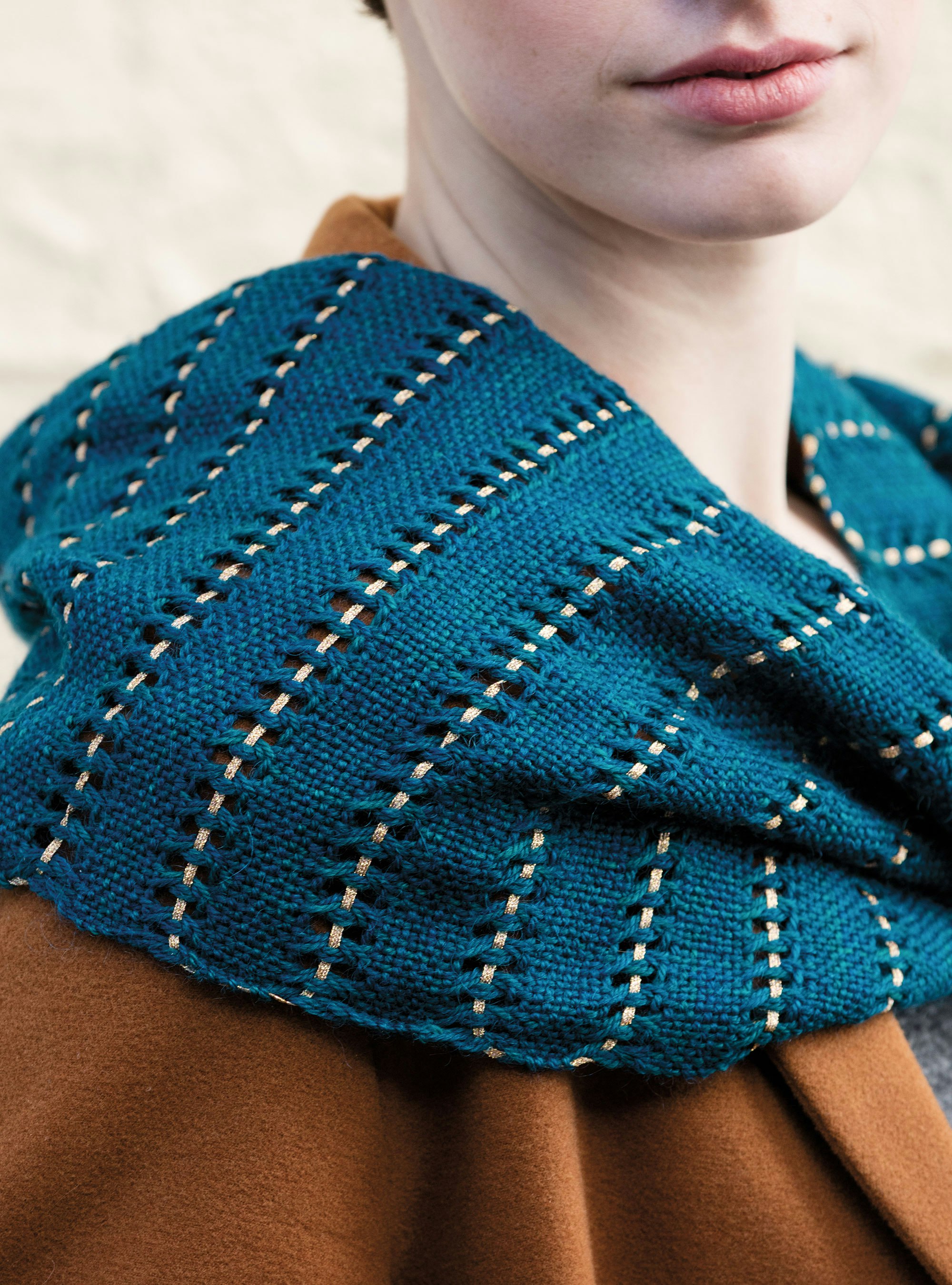
Deb Essen chose to use a metallic ribbon yarn as an accent in her Shimmer and Shine Infinity Scarf, using hand-manipulated lace to set off the special yarn. Click on the photos in the gallery to get a closer look and more information. Photos by George Boe
Say you want to use a specific metallic yarn, but it’s not one you’d want to use for the entire piece because you have a limited amount, only want a touch of twinkle, etc. Even when used in small amounts, metallic yarns will can make a big impact.
Deb Essen’s Shimmer and Shine Infinity Scarf from Summer 2017 is a great example. She wove the scarf in a combination of plain weave and leno, using a superwash wool blend for the warp and most of the weft. For her metallic component, she used a ribbon yarn, which she highlighted by using as the center weft in the rows of leno. Even though the scarf contains only a few overall picks of the metallic, the open weave of the leno makes sure it’s the first thing you notice.
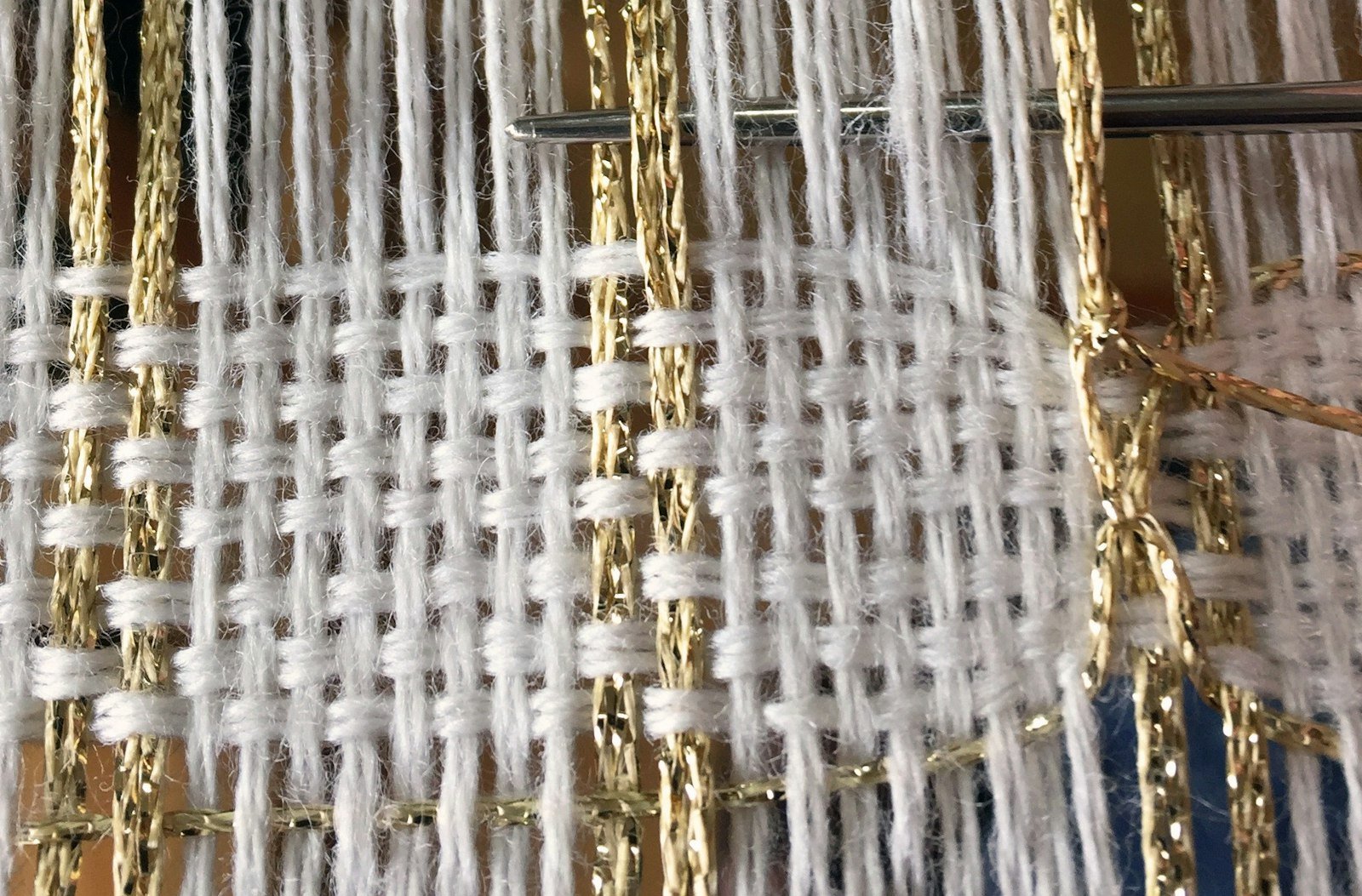
In the Tiny Bubbles Shawl (from Summer 2018, seen in the image at top), designers Gretchen Jaeger and Halcyon Blake took a similar approach, using small amounts of metallic in the warp to great effect.
Pin Loom
You can can also use metallic as an accent in pin-loom weaving, especially using 3-pin pin looms. Simply limit the metallic to one or two layers and then weave the rest of the pin-loom piece with a secondary yarn. I’ve successfully woven with sequin yarns using this method—while the sequins would not be fun to needleweave in the fourth layer, they work just find being wound in layers 1–3.
Inkle and Tablet
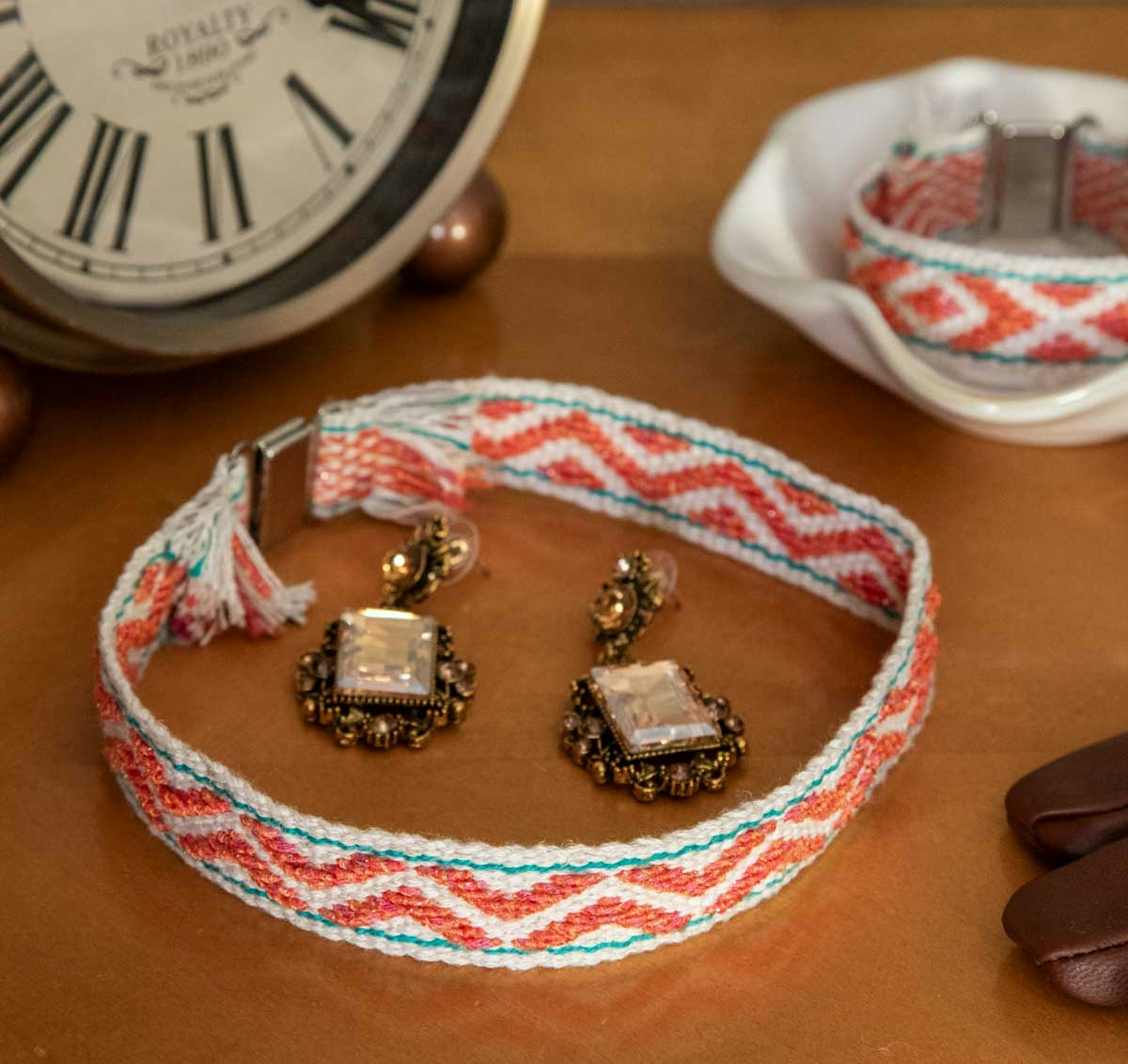
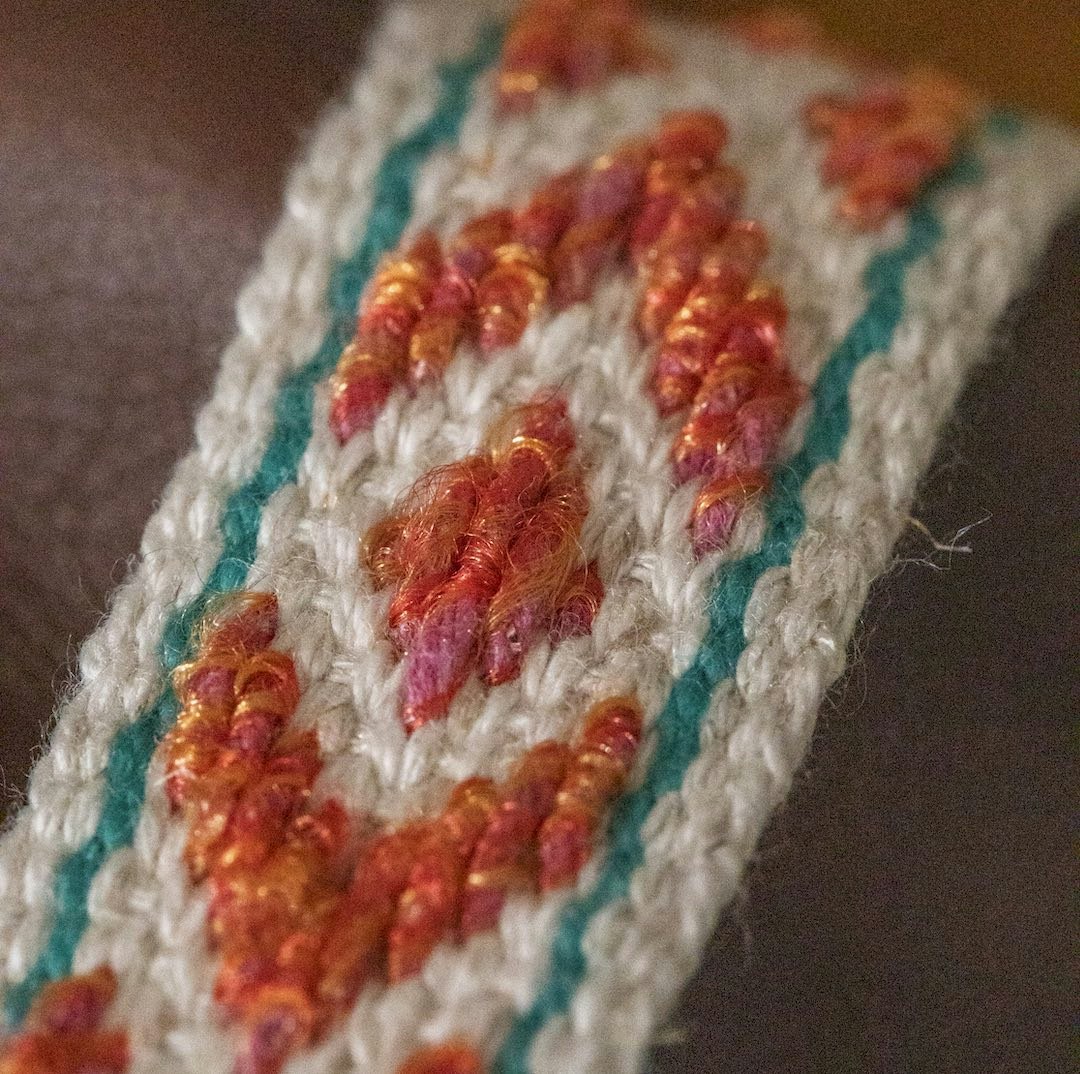
In her Touch of Turquoise Bracelet, Alison Irwin chose a yarn with a hint of metallic for her pattern warp. Click on the photos in the gallery to get a closer look and more information. Photos by Matt Graves
For inkle weaving, try using your metallic as a pattern warp, as Alison Irwin did in her Touch of Turquoise bracelets from Fall 2024. For her metallic yarn of choice, Alison opted for a plied yarn made up of mostly cotton with small amounts of shimmer. The result is more subtle, but the shine from the metallic gives the bracelet a beautiful bit of sparkle.
Pair it with a Carrier Yarn
 Christina wove this band by pairing perle cotton with iridesccent filament. Photo by Christina Garton
One final option is to pair your metallic with a secondary carrier yarn. You can use this method on any type of loom and in either the warp or weft. I recommend pairing a fine metallic with a thicker, durable carrier yarn—if your metallic is too thick or too highly textured, you might have trouble getting your yarns through heddles.
I frequently use this technique with a subset of metallic thread I refer to as filament thread. Some manufacturers also call these filament threads, some call them metallic threads—I prefer to use the term filament thread because it’s more precise. These are fine ribbon-like threads sold in the sewing section. I love these threads because they come in iridescent options and they blend in beautifully with the carrier and surrounding yarns. You can even find translucent options for a stealthier sparkle! Filament threads work great on all types of looms when paired with a carrier yarn, although my favorite is to use them in tablet weaving—you can see some of my experiments here.
Final Thoughts
While I know using metallic yarns in your weaving for the first time can be intimidating, it can also be a lot of fun! You can use metallics as inlay, as supplemental fringe—the options are endless! I recommend starting small and sampling first, whenever possible. There’s a wide, wonderful world of shimmering, sparkling yarns out there. Have fun exploring!
Happy Weaving!
Christina