

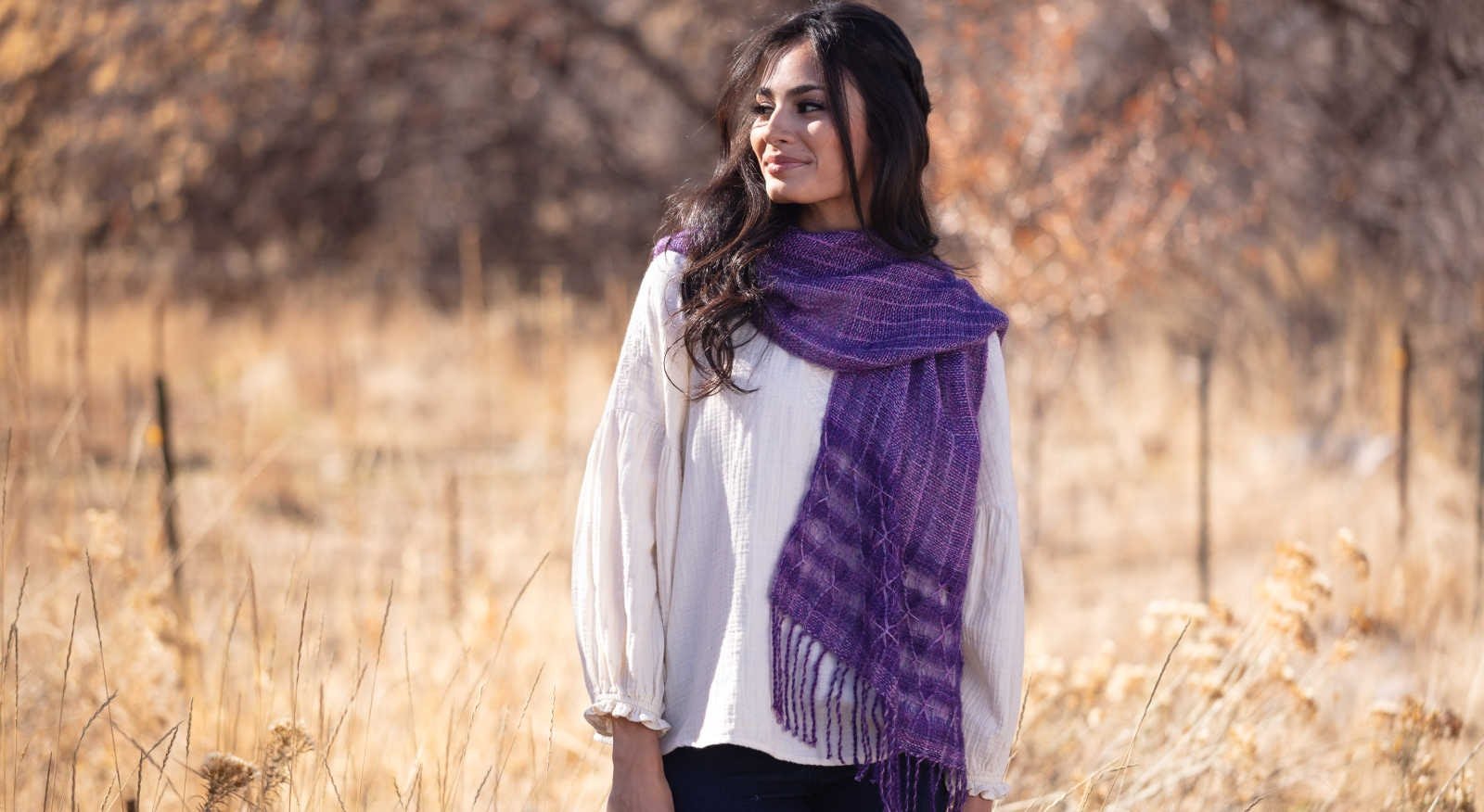
This summer, I’d like to challenge you to think differently about your selvedges. I think most weavers (myself included) don’t think much about our selvedges—except that we’d ideally like them to be straight and even. Selvedges are important—just not exciting, right? Not necesarily.
What if we started treating selvedges as another creative opportunity—another place in our cloth where we can make choices to enhance our design or add embellishments?
Just as you can finish your ends in any number of ways—hems, fringes, braids—you can enhance your selvedges with all kinds of interesting techniques and approaches. We’ve worked with Sara Bixler, weaver and teacher extraordinaire, to put together a series of short videos on ways you can “spice up your selvedges,” which we’ll release throughout the summer on both the Little Looms and Handwoven websites. We’ll include other tips, tricks, and inspiration for employing these techniques in your own weaving.
Let’s Talk Lace
To start off our Summer Selvedge Series, we’re focusing on lace. Whether you’re weaving it using pick-up sticks or hand-manipulation techniques, lace at the selvedges creates lumps and bumps. So, what’s a weaver to do? In this video, Sara Bixler explains a few approaches to handling lace selvedges.
In the video, Sara’s examples were all woven on a multi-shaft loom, but all her suggestions work for rigid-heddle weaving. In fact, let’s take a look at a few projects from Little Looms that showcase different methods for dealing with lace selvedges.
Embrace the Bumps
One option for handling the uneven selvedges that lace creates is to simply embrace them as a design feature. For her Amethyst Scarf shown at top, Tammy Bast wove the bulk of her scarf in plain weave, adding leno only at the ends. The scalloped edging the leno creates adds to the design by emphasizing the lace sections even more. While the plain weave is beautiful, the lace is the star of the show.
In her Fortuna Major Scarf from Little Looms 2017, designer Stephanie Flynn does just that, weaving Brooks bouquet along the full width of the warp—including at the selvedges. The result is an overall fun, bubbly design with delightful scallops on the edges.
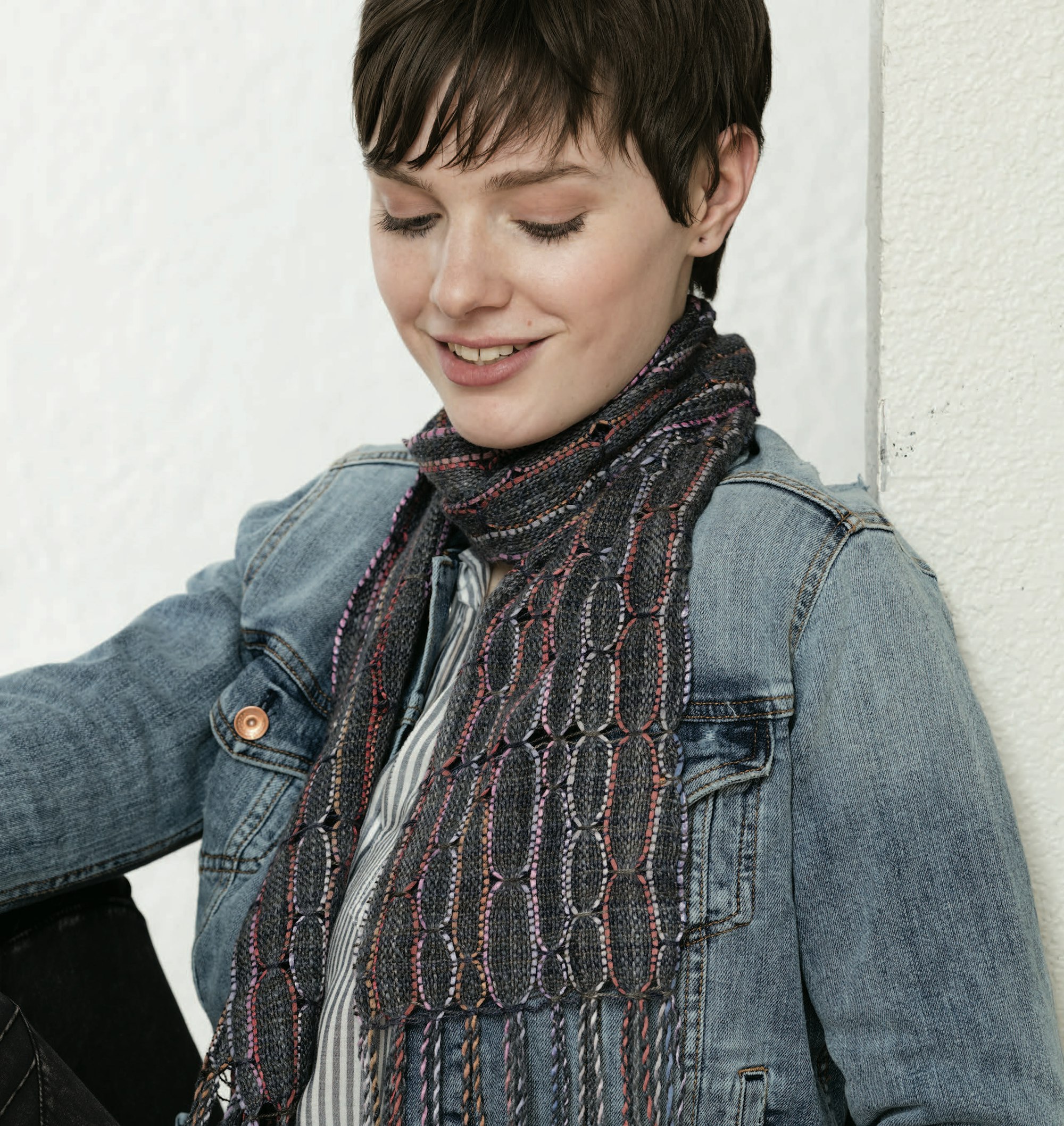
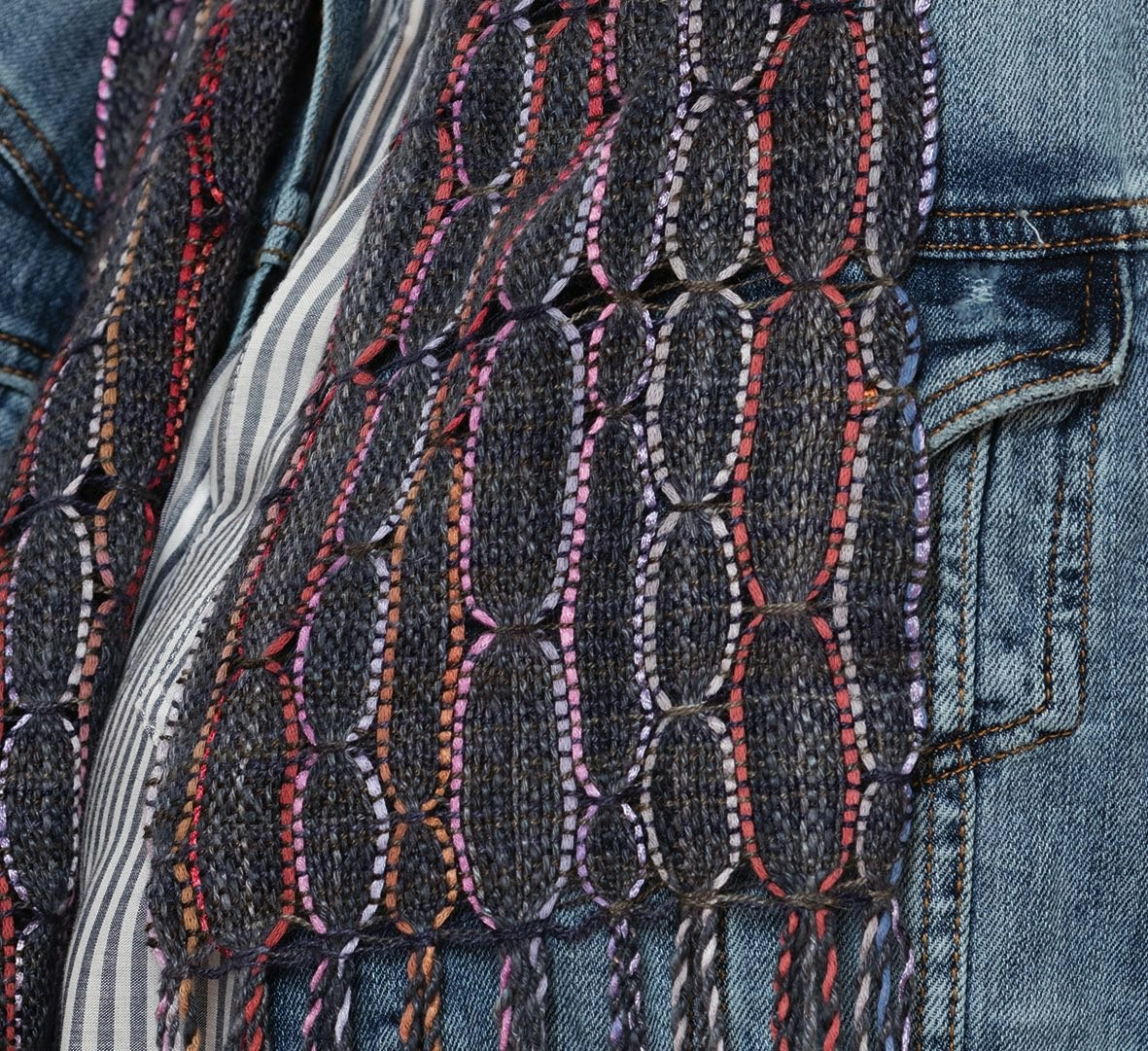
The alternating short and long scallops along the sides of Stephanie Flynn’s Fortuna Major Scarf help enhance the project’s overall fun, bubbly vibe. Photos by George Boe
In her Flutterby Scarf from Spring 2026, Yvonne Ellsworth wanted to design a scarf that felt like a light summer breeze. She added staggered Brooks bouquet motifs throughout to represent light puffs of wind. The draw-in from the Brooks bouquet close to and at the selvedge causes some gentle, uneven scalloping. The irregular edges add to, rather than detract from, Yvonne’s easy, breezy feeling scarf, giving it an even more organic, free-flowing feel.
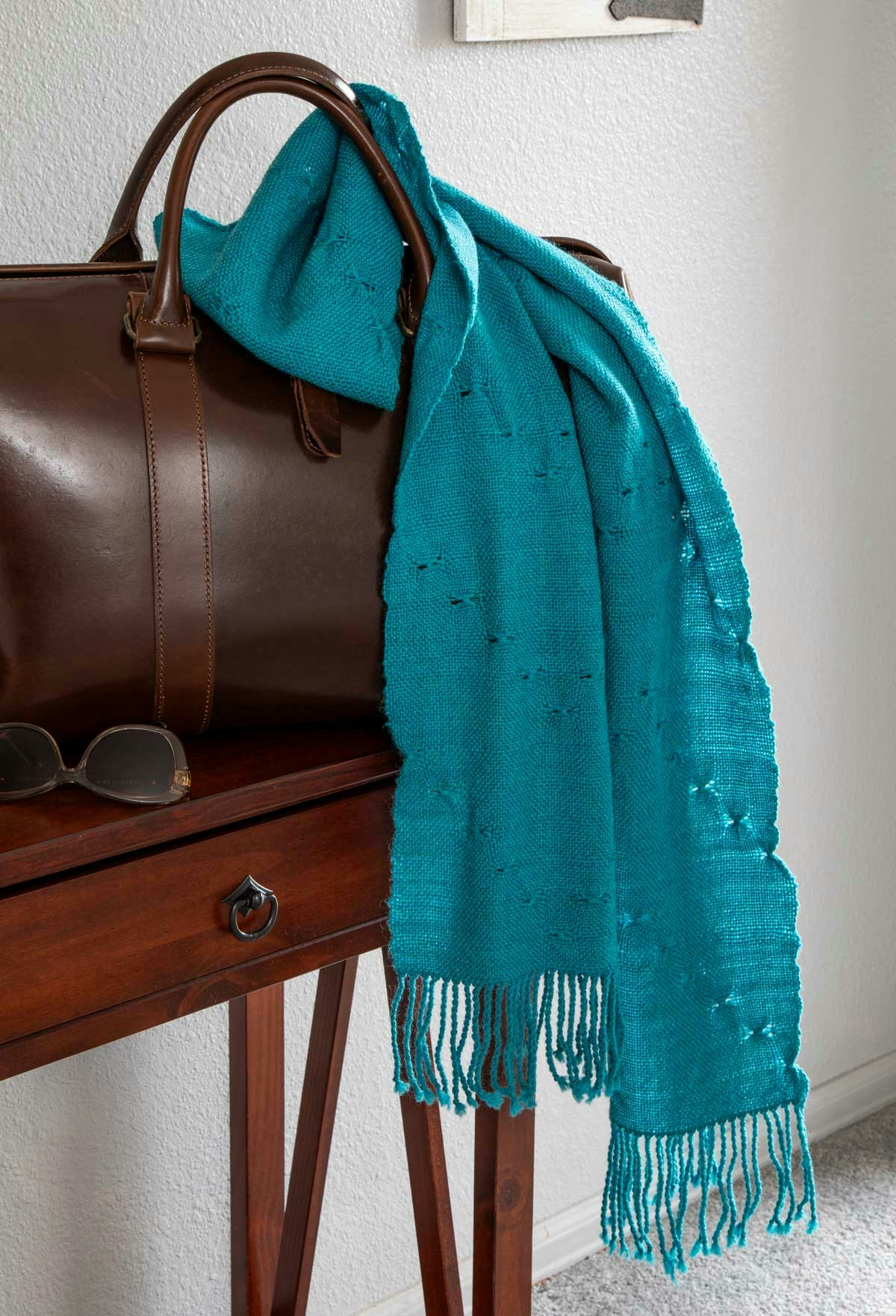
Yvonne Ellsworth used the uneven selvedges caused by the staggered Brooks bouquet as a design feature in her Flutterby Scarf. Photo by Matt Graves
Weave a Border
For straight and even selvedges, adding a plain-weave border is an easy option for rigid-heddle weavers. Unlike multi-shaft weavers who have to manipulate drafts and deal with tie-ups, rigid-heddle weavers can easily add plain weave borders to lace weaves. If you’re using a pick-up stick, simply pick-up the first few ends you’d like to become the pick-up border before following the rest of the pick-up stick setup as written. (You may need to do a little math to make sure your have an even number of ends at your borders.)
That’s exactly what Nancy Peck did in her Spiderweb Scarf from Winter 2022. The border is fairly small, too. Just a few picks of plain weave might be all you need to keep your selvedges even.
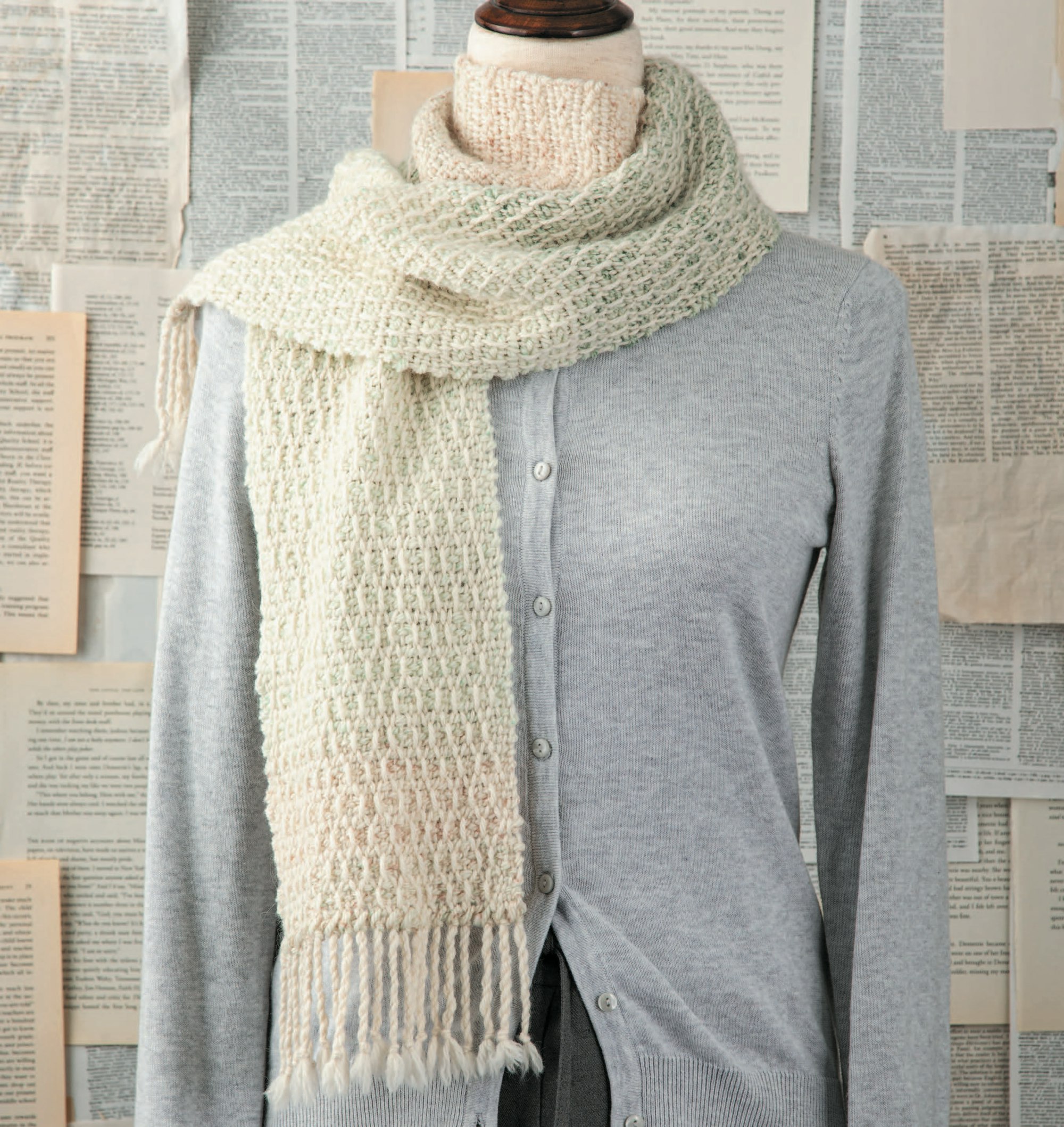
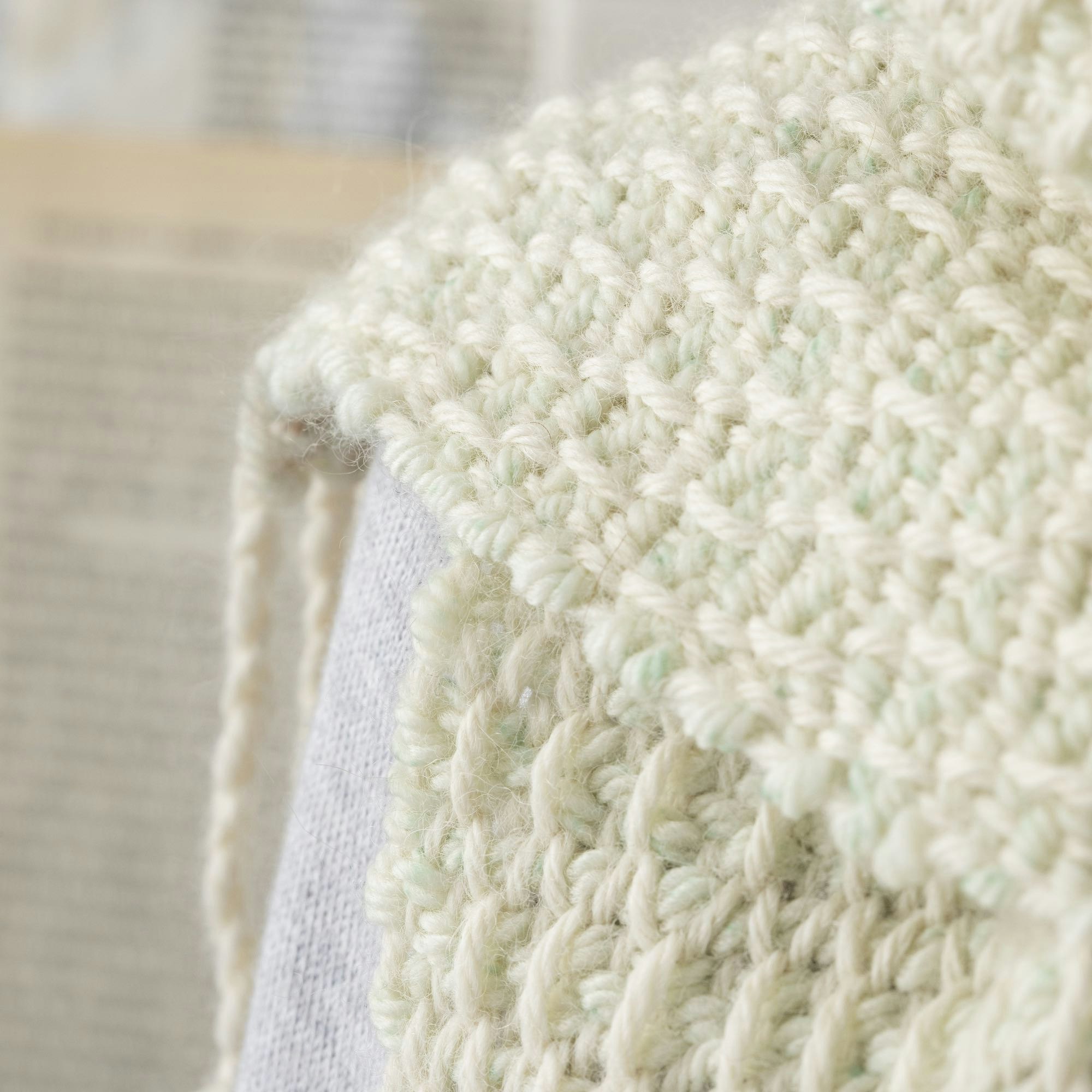
The plain-weave border at the edge of Nancy Peck’s Spiderweb Scarf is barely visible, even when viewed up close, but without it, her selvedges would have been extremely uneven. Photos by Matt Graves
If you’re using a hand-manipulated lace technique, it’s even easier to add a plain-weave border. Simply start your lace however many ends in from the border that you think looks best. Sheleigh Peers used two different hand-manipulated laces in her Sheaves of Wheat Table Runner from Summer 2026: leno and Brook’s bouquet. To keep her selvedges straight, she started each row of lace a bit more than an inch into her cloth. The resulting border not only gives her runner straight selvedges, but it also serves as a frame for Sheleigh’s beautiful lace motifs.
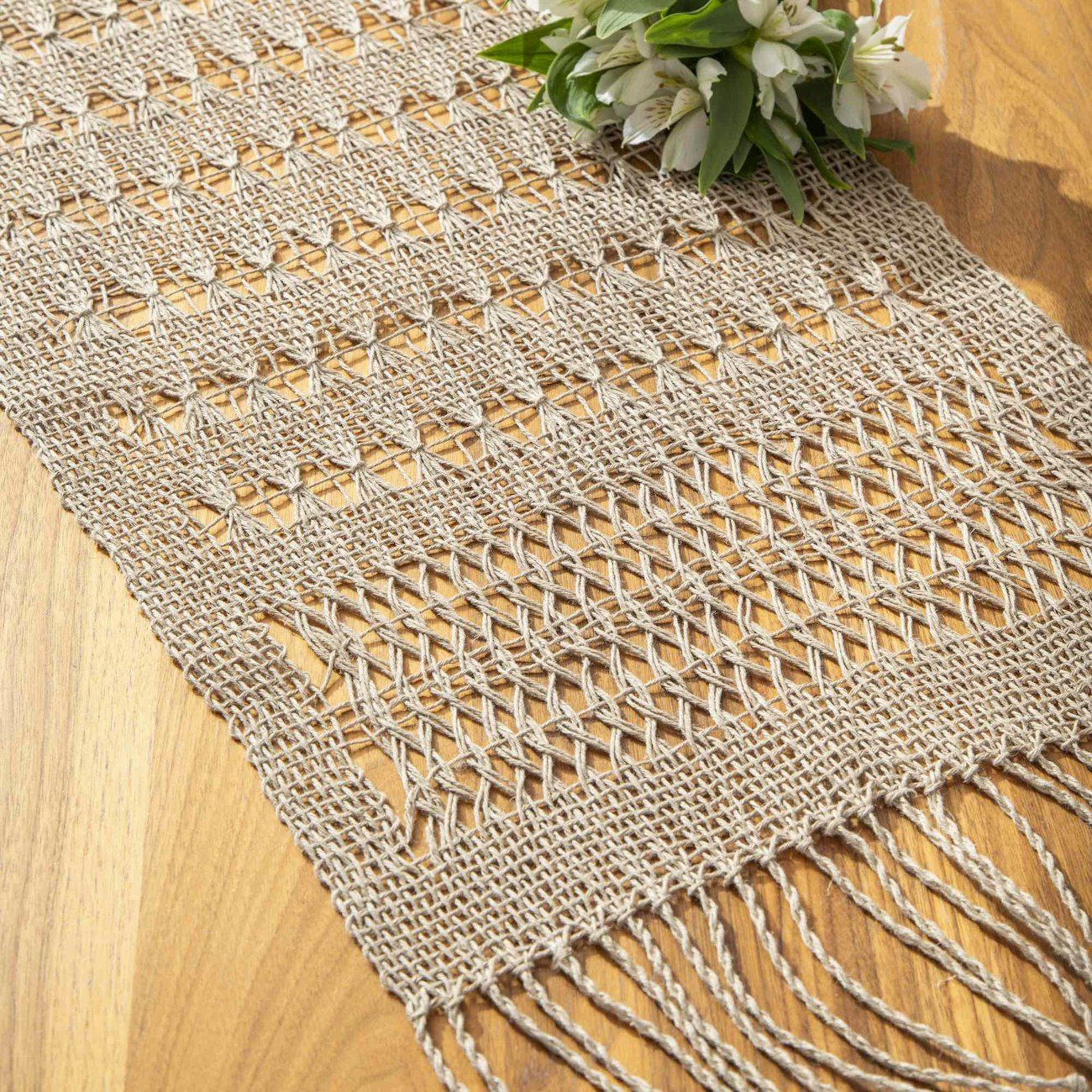
A thick border of plain weave along the selvedges of Sheleigh Peers Sheaves of Wheat Table Runner not only gives the runner clean, straight selvedges, but also creates a frame that helps emphasize the beautiful lace patterning. Photo by Matt Graves
Final Thoughts
So, the next time you’re designing a project in lace, whether it’s pick-up or hand-manipulated, take some time to think about your selvedges and how you want to treat them. Which method you choose depends on what kind of item you’re making and your own personal aesthetic opinions. There’s really no wrong option, so if you’re not sure, add enough warp for some sampling and see what you like best. One of the many benefits of rigid-heddle weaving is that you can easily change your approach simply by adding or adjusting a pick-up stick or changing where you start your lace.
Stay tuned for the next Summer Selvedge Series installment! And remember, if you’re also a multi-shaft weaver, you can find more ideas and inspiration for handling lace selvedges in Handwoven’s first installment of the Summer Selvedge Series.
Happy Weaving!
Christina